

How to Care for Linen: Wash, Dry, and Iron Without Damaging It
Knowing how to care for linen means ensuring that a beautiful piece lasts through many summers rather than just one season. Linen is one of the noblest and most resilient fibres in the wardrobe: cultivated without irrigation, spun and then woven according to age-old craftsmanship, it becomes softer and more beautiful with each wash — provided it is treated correctly. Washed incorrectly, it shrinks; dried incorrectly, it becomes misshapen; ironed incorrectly, it develops a shine and wears out. Yet none of this is complicated: you simply need to understand the nature of the fibre and adopt a few simple habits. This guide brings together everything you need to know to wash, dry, iron, remove stains from, and store your linen garments without ever damaging them — and to make each piece a long-lasting companion, faithful to the idea of a restrained wardrobe designed to endure.
Why Linen Requires Specific Care
Linen is a plant fibre derived from the stalk of cultivated flax, long, hollow, and naturally rigid. This structure gives it its great qualities — coolness, breathability, strength — but also its particular care requirements. The fibre is highly absorbent: it swells on contact with water, which makes it fragile when handled wet and wrung too vigorously. It is also sensitive to heat, which can cause it to shrink abruptly. Understanding this is enough to avoid most mistakes: wash linen at low temperature, handle it delicately when damp, and let it regain its shape by drying flat or on a hanger. When properly cared for, linen does not wear out — it develops a patina, gaining suppleness and character over the years.
Before the First Wash: Precautions That Make All the Difference
The first wash is decisive, as it sets the fibre and reveals most of any potential shrinkage. First, read the label: a quality pure linen, pre-washed and prepared by the manufacturer, shrinks very little, whereas raw linen may shrink by a few percent. Wash the piece alone or with similar colours the first few times, as dyed linen may bleed slightly at first. Fasten buttons and zips, turn the garment inside out to protect the seams and the dye, and avoid hot water and the tumble dryer from the outset: these are the two main causes of shrinkage. One simple and lasting habit: use a mild detergent, ideally liquid and free from harsh bleaching agents, which respects the fibre and preserves the brightness of natural shades.
How to Machine-Wash Linen Without Damaging It
Contrary to popular belief, most linen pieces wash perfectly well in the machine. The rule comes down to three points: low temperature, gentle cycle, moderate spin. Set the machine to a maximum of 30 °C — cold water works perfectly and eliminates any risk of shrinkage. Choose a delicate or "synthetics" programme, and above all reduce the spin speed to 600 rpm at most: a violent spin creates deep creases and fatigues the water-swollen fibres. Do not overload the drum, so that the laundry circulates freely and does not bunch up and crease. Avoid fabric softener, which clogs the fibre and impairs its breathability; a little white vinegar in the compartment naturally softens the water and brightens colours. For an everyday shirt like our Coulange linen shirt, this protocol is enough to keep the fabric crisp season after season.
Hand-Washing Linen: The Gentle Method
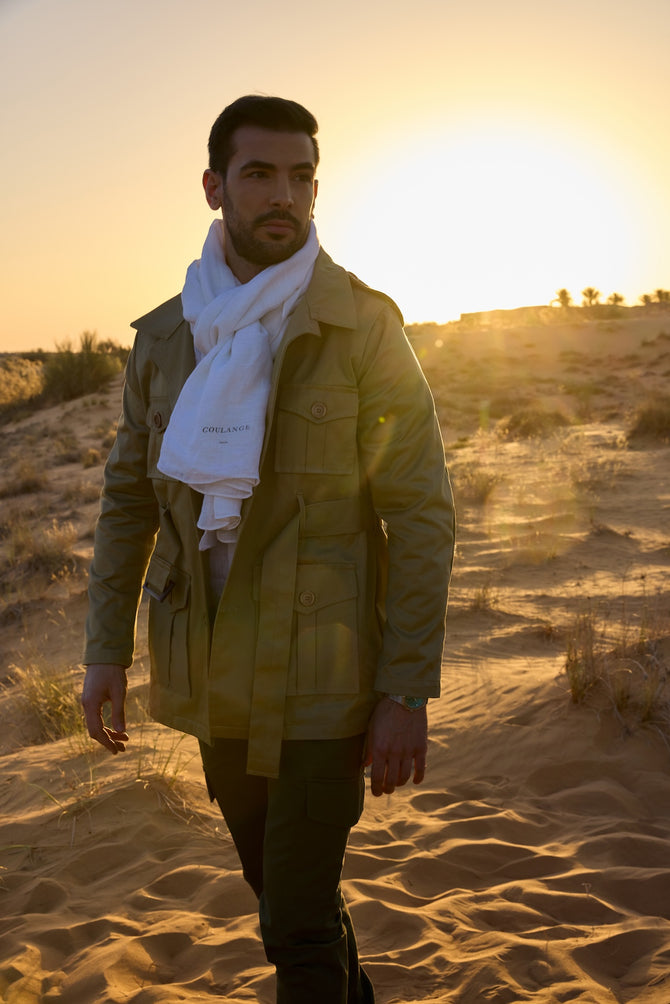
For the most precious pieces, deep colours, or a new garment you wish to treat with extra care, hand-washing remains the safest route. Fill a basin with lukewarm or cold water, dissolve a dab of mild detergent, then immerse the garment and let it soak for ten to fifteen minutes. Gently press the fabric without twisting or rubbing: wet linen dislikes twisting, which breaks the fibre and creates irregular creases. Rinse in clear water until all soap has disappeared. To remove excess water, press the piece flat between two terry towels rather than wringing it. This method, slightly longer, is ideal for a fine scarf like the C53 linen cheche, whose lightness demands a gentle hand.
Drying Linen: The Step That Makes All the Difference
Drying is the most neglected and yet the most decisive step. Avoid the tumble dryer: its heat shrinks the fibre, stiffens the fabric, and fatigues the seams — it is the leading cause of linen garments becoming too small. Always dry in the open air, preferably in the shade, as direct sunlight can fade natural colours. Remove the piece from the machine as soon as the cycle ends, shake it out with a sharp gesture to loosen creases, then hang it on a wide hanger, buttoned, or dry it flat for knits and heavy pieces. It is during drying that linen regains its shape: a garment that is well hung while still damp recovers its drape with almost no need for ironing. For trousers like our B45 linen trousers, hang them by the waistband, legs aligned, so the fabric falls straight and neat.
Ironing or Steaming Linen: The Right Approach
Creasing is part of linen's identity: that lively grain, those soft folds, are precisely what distinguishes a natural fibre from a synthetic imitation. There is therefore no need to seek a perfectly smooth surface — slightly creased linen is authentic linen, and that is its entire charm. When a crisper finish is desired, two options exist. A garment steamer, passed over the garment while still on the hanger, is the quickest and gentlest solution: it relaxes the fibre without crushing it. An iron, on the other hand, should be used on linen that is still slightly damp, at the "linen" temperature setting (the hottest), ideally on the reverse side or with a pressing cloth, ironing in the direction of the fibres. Never iron completely dry linen: it develops shine and marks. A few minutes are enough to restore a summer linen jacket to its impeccable drape without altering the material.
Removing Stains from Linen: Techniques That Work
A stain on linen is best treated the sooner you catch it. Dab immediately with a clean cloth to absorb, without rubbing, so as not to drive the stain deeper. For greasy stains, sprinkle with fuller's earth or talcum powder, leave to work, then brush off. For wine or coffee, rinse with cold water then apply a little Marseille soap or ox gall before the usual wash. Baking soda and white vinegar, diluted, will remove most common stains without attacking the fibre. Avoid bleach on dyed linen, which discolours and weakens it; reserve it, heavily diluted, for white linen only. In the case of a stubborn stain, a mild stain remover applied locally before washing is more effective than washing at a high temperature, which is always discouraged.
Storing and Preserving Linen Out of Season
When stored correctly, linen keeps for years without losing any of its qualities. Wash and dry each piece thoroughly before storing it: an invisible stain or a trace of damp attracts moths and marks the fibre over time. Choose soft folding or, better still, a hanger for jackets and shirts, in a dry and airy space. Avoid airtight plastic covers, which prevent the fibre from breathing and encourage yellowing; prefer a cotton or linen cover. Slip a block of cedar or a few sachets of lavender into the storage to repel moths naturally, without naphthalene. Once a season, take the pieces out and air them. These simple gestures prolong the life of linen and accompany the spirit of a wardrobe designed to last, detailed in our guide to linen and cashmere accessories.
Linen Care According to Coulange: A Fibre Made to Last
At Coulange, linen is not a seasonal material but a commitment. Our pieces are cut from fabrics chosen for their resilience and handcrafted in our workshop in France, designed from the outset to age gracefully. Careful maintenance extends this commitment: it is what transforms a shirt or a pair of trousers into a long-haul companion, one that develops a patina and can be passed on. Explore our dedicated guides to get the best from each piece — the men's linen shirt, the women's linen trousers, or the women's linen dress — and adopt the right habits from the very first wash. Every Coulange garment comes with a lifetime guarantee: proper care is its natural extension, and the best way to respect the work from thread to workshop.
FAQ on Linen Care
Does linen shrink in the wash?
A quality pure linen, pre-washed by the manufacturer, shrinks almost not at all if washed cold or at 30 °C and dried in the open air. Shrinkage almost always comes from hot water and the tumble dryer, which abruptly contract the fibre. By following low temperatures and natural drying, your pieces keep their dimensions season after season.
At what temperature should linen be washed?
At 30 °C maximum, and ideally cold. Cold water cleans everyday linen perfectly, eliminates any risk of shrinkage, and preserves the brightness of the colours. Reserve hand-washing, in lukewarm water, for the most precious pieces or deep colours you wish to treat gently.
Does linen need to be ironed?
It is not mandatory: slight creasing is part of linen's charm and a sign of its authenticity. If you want a crisper finish, a garment steamer on the hanger is usually enough. To iron, do so on linen that is still damp, at the "linen" temperature setting, on the reverse side or with a pressing cloth — never on completely dry linen, which develops a shine.
Can linen go in the tumble dryer?
It is strongly discouraged. The heat of the tumble dryer shrinks the fibre, stiffens the fabric, and fatigues the seams: it is the leading cause of linen garments becoming damaged or shrunken. Always dry linen in the open air, in the shade, on a hanger or flat, shaking it out as soon as it comes out of the machine to loosen creases.
How do you keep linen soft and supple?
Linen softens naturally with each wash. Avoid fabric softener, which clogs the fibre, and instead use a splash of white vinegar in the rinse compartment, which softens the water and brightens colours. Open-air drying and airy storage complete the effect: over time, the fabric gains in suppleness without ever losing its body.