

Men's Military Jacket: History, Codes and How to Wear It
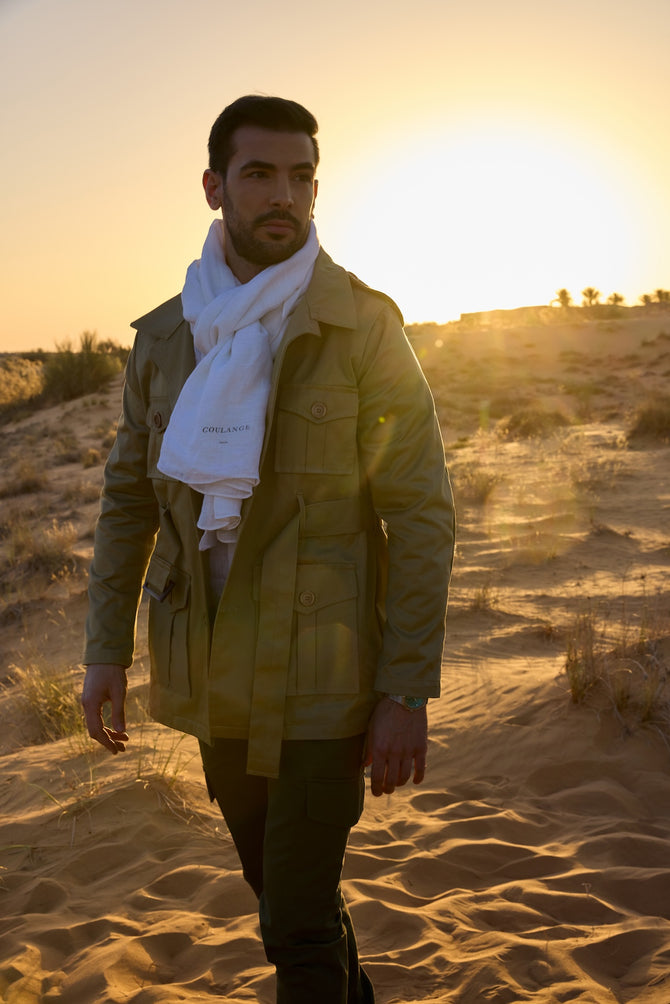
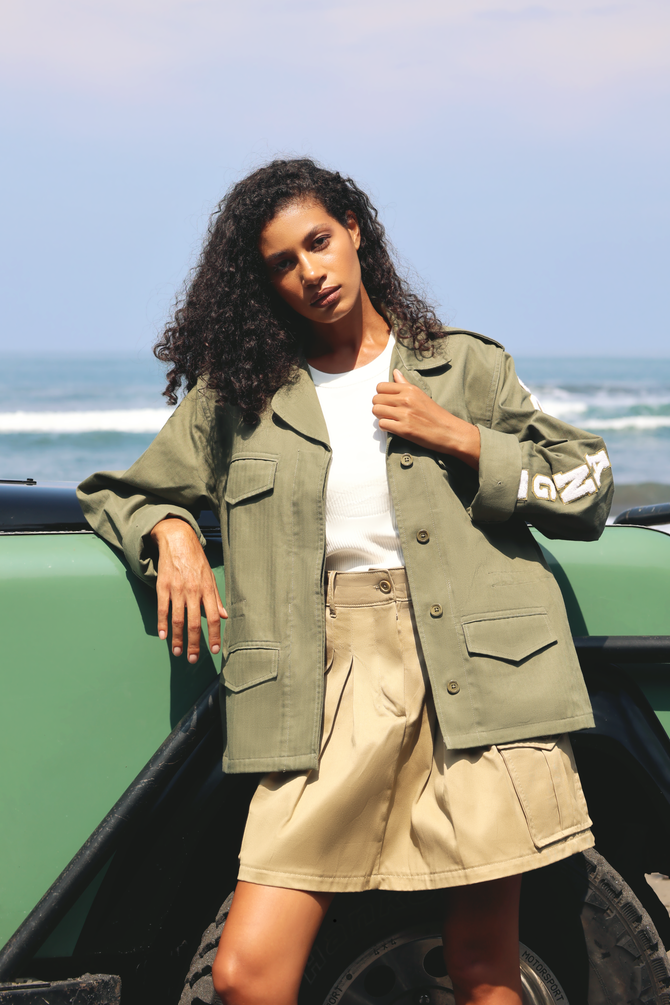
The men's military jacket embodies the perfect fusion between strategic utility and austere elegance. Born on battlefields, perfected through decades of service, it has conquered civilian fashion not through compromise, but through its indisputable structural integrity. This article explores the origins of the military jacket, decodes its semiotic codes, and shows you how to integrate it naturally into a contemporary wardrobe. Coulange 1918, French manufacturer committed to quality and traceability, guides you through this universe rich in military heritage and unlimited stylistic possibilities.
The Origins of the Military Jacket: Between Function and Hierarchy
The modern military jacket emerged in the 19th century, when European armies adopted standardized uniforms to simplify mass conscription and hierarchical recognition. Unlike previous, more ornate and less rational uniforms, the 19th-century military jacket prioritized clarity: each element (epaulettes, pleats, buttons) communicates a rank, a regiment, a function.
The First World War accelerated evolution. Trenches demanded clothing that didn't hinder movement, that offered functional pockets, and a structure capable of supporting the weight of equipment. Victorian tunics gave way to more fitted cuts. The Great War transformed the military jacket into a purely functional piece—which, paradoxically, reinforced its aesthetic nobility.
After 1945, mass demobilization introduced military jackets to the civilian market. Former soldiers wore them because they were robust, reliable, and laden with meaning. Gradually, civilian designers seized these codes, creating a hybrid: the military-style jacket that borrows visual codes without imposing the rigid constraints of military wear.
Decoding Military Codes: Reading a Jacket
An authentic military jacket communicates a precise visual grammar. Rigid epaulettes—those reinforced bands on the shoulders—originally served to reinforce tension points where equipment straps attached. Visually, they redefine the silhouette by broadening the shoulders, creating an inverted V that slims the hips. This is biomechanics in the service of aesthetics.
The pleats—generally two vertical pleats on the chest, located between center and armhole—increase freedom of movement while creating a vertical visual line that elongates the silhouette. Patch pockets, often equipped with flaps, are designed to allow secure access with hands occupied by other equipment. Every detail responds to a logic, and it is this internal logic that creates beauty.
The buttons—often in gold or silver metal—reflect the military branch or regiment. The collars, generally stand-up and not too ample, offer neck protection while maintaining a formal appearance. Reinforced seams at critical points guarantee exceptional durability. Understanding these codes means learning to read the architecture of a jacket.

Coulange 1918
Military Jacket M38
Streamlined structure, authentic details, summery lightness. The military jacket in a contemporary French version.
Discover →Military Jacket vs Other Military-Influenced Jackets
An important distinction: the authentic military jacket imposes a formal rigidity that can seem intimidating in civilian wear. A military-style jacket borrows these codes while softening them—reducing epaulette stiffness, slightly increasing sleeve amplitude, offering a less martial collar. It is this hybridization that makes the military jacket civilized without it losing its authority.
Gorpcore uses technical materials inspired by military equipment but prioritizes color and lightness. The military parka prioritizes thermal insulation at the expense of form. The military jacket, on the other hand, remains a balance: it's formality made accessible, rigor made desirable.
How to Choose Your Military Jacket: Cut and Proportions
A well-cut military jacket should feel naturally shouldered without ever constraining arm movement. Sleeves should reach your wrist, revealing about 1-2 cm of shirt or inner sleeve—this exposure creates visual balance and ease. The ideal length stops at mid-thigh, offering ample coverage without appearing oversized.
The waist should be slightly marked. A fit that's too loose loses the military essence (which celebrates structure); a fit that's too tight becomes uncomfortable and visually aggressive. A good waist fit creates a slight pinch at skin contact, sufficient to affirm the silhouette without hindering movement.
Overall proportions should be slightly bold: if you hesitate between a size that "fits" comfortably or one that "creates presence," go for presence. A timid military jacket loses its impact; a confident military jacket redefines your silhouette entirely.
How to Wear the Military Jacket in 2026: From Casual to Elegant
Over a simple white t-shirt and raw denim, the military jacket creates a look of structured nonchalance: what the French call "dressed-down dressed." It's the perfect balance for ordinary days that demand a certain authority. Complete with ankle boots or premium sneakers, and you have an outfit that works.
For more formality, wear the military jacket over a white Oxford shirt and beige chinos. Add a coordinated leather belt and structured leather shoes: you have an appropriate outfit for professional meetings or semi-formal events. The military jacket provides the rigor; the shirt adds finesse.
In winter, layer it over a merino wool turtleneck for captivating tactile depth. In summer, wear it slightly open over a graphic t-shirt for an urban adventurer vibe. The military jacket never asks for permission—it simply integrates into your sartorial context and reorganizes it around itself.
Materials and Durability: Investing in Reliability
Traditional military jackets favor heavy cotton (8-10 oz, i.e. 270-340 g/m²) or cotton-wool blends. These materials offer excellent breathability while maintaining a robust structure. Heavy cotton ages beautifully: the more it's worn, the more it softens and adopts the curves of your body.
Modern alternatives—technical nylons, innovative polyesters—offer equal durability with simplified care. Coulange 1918 works exclusively with traceable materials, made in France, guaranteeing that your military jacket is not only beautiful, but also responsible.
Investing in a quality military jacket is justified by its longevity. A well-maintained example can easily last two decades, acquiring a patina and character that increase its emotional value. It's a piece you might pass on to your son or daughter—it's not a garment; it's a portable heritage.

Coulange 1918
Officer Jacket B16
Marked epaulettes, authentic details, noble wool. The quiet authority of a timeless French military jacket.
Discover →Care: Preserving Structure and Color
A cotton or cotton-wool blend military jacket washes in lukewarm water on a delicate cycle, ideally with a specialized detergent for delicate fabrics. Avoid bleach or whitening agents that degrade fibers and alter shades. Air-dry, preferably flat, to preserve the structure of the collar and epaulettes.
Occasional ironing—particularly on the collar, pleats, and sleeves—maintains that slightly sharp appearance characteristic of military clothing. Use medium heat, never maximum, and favor light ironing (a few passes, no prolonged pressure).
Store your jacket on a sturdy hanger in a dry, well-ventilated closet. Military jackets don't appreciate excessive humidity or stagnant heat. During long-term storage (several months), regularly check the fabric condition and ensure no mold appears.
The Military Jacket as Statement
Wearing a military jacket means asserting that you understand the beauty of voluntary constraint. It means choosing a piece that refuses to flatter you, that instead imposes a certain postural nobility. A chic adventurer knows that true style lies in accepting frameworks—not as limitation, but as liberation.
The military jacket is a declaration of values. It says you respect durability, that you appreciate heritage, and that you are confident enough to wear a piece that communicates authority. It also says you understand that true elegance resides in the subordination of appearance to function.
FAQ
Can you wear a military jacket as a civilian without looking costumed?
Absolutely. A well-chosen military jacket, worn over denim or neutral chinos, creates a naturally elegant silhouette. The key lies in balance: keep the rest of the outfit simple and minimalist to let the jacket breathe.
What's the difference between a military jacket and a military-style jacket?
An authentic military jacket comes directly from military standards (epaulettes, strict pleats, colored buttons). A military-style jacket borrows these aesthetic codes but adapts them for civilian wear, with more fluidity and less formal rigidity.
How to care for a cotton military jacket?
A cotton military jacket washes in lukewarm water on a delicate cycle. Avoid bleach which discolors. Air-dry to preserve the structure. Occasional ironing at critical points (collar, pleats) maintains a sharp appearance.
Do military jackets suit all body types?
Yes. Military cuts are remarkably inclusive. Reinforced shoulders flatten an inverted triangle body type. The generous length suits slender and stocky silhouettes alike. A good fit at the waist enhances any silhouette.
Can you buy a military jacket second-hand or vintage?
Yes, vintage military jackets offer incomparable authenticity. However, examine wear, check seams, and ensure the cut remains relevant for your silhouette. Coulange 1918 offers new military jackets, made in France, with the same historical dimension but the reliability of new.