

Women's Trench Coat: The Complete Guide to Choosing and Wearing the Right Model
The trench coat is far more than a simple rain garment. It's a timeless style statement, a symbol of understated elegance and refined adventure. For the modern woman who refuses to compromise between comfort and allure, the women's trench coat is that essential piece that spans seasons and years without ever aging. At Coulange 1918, we see the trench coat as a centerpiece — one that transforms an ordinary silhouette into a remarkable presence. This complete guide will help you choose your ideal trench coat and wear it with the confidence it deserves.
The Origins of the Trench Coat: A Piece Forged by History
The history of the women's trench coat begins on the battlefields of the Great War. Originally designed by Burberry and Aquascutum to protect British officers from hostile weather conditions, the trench coat was a functional garment with unique details: an adjustment belt, military epaulettes, double-row buttons, and a shoulder cape for air circulation.
After 1918, the trench coat gradually left the military ranks. The 1920s and 1930s saw it adopted by the urban elite, and particularly by women who discovered in it a garment capable of drawing a proud and autonomous silhouette. Actresses like Katharine Hepburn and Audrey Hepburn popularized it, transforming it from a uniform into a timeless icon. Today, the women's trench coat remains a universal classic, worn as much in professional settings as in relaxed contexts. This military heritage — associated with structure, quality, and durability — explains why Coulange 1918 places the trench coat at the heart of its philosophy: adventurer garments, sober and made to last.

Coulange 1918
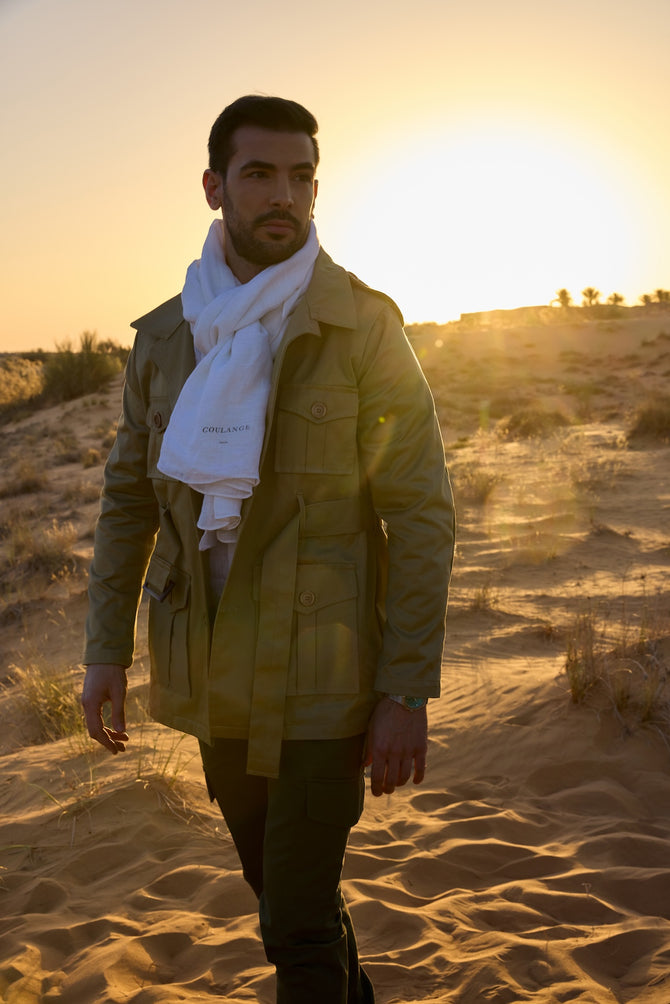
M67 Trench Coat — Khaki Green
Timeless and authentic. Natural khaki green, clean cut, discreet military details. Made in France.
Discover →The Essential Cuts of the Women's Trench Coat
The women's trench coat exists in several cuts, each offering a distinct personality. Understanding these variations will allow you to choose the model that harmoniously fits your body type and your needs.
The Classic Fitted Trench Coat. This is the historical model, the one worn by officers and then by elegant women of the 1950s. It lightly hugs the shoulders and cinches at the waist via its iconic belt. For women, this cut enhances the silhouette without imprisoning it. It particularly suits women with regular or slender builds.
The Oversize Trench Coat. Appearing in the 1980s-1990s under the influence of designers like Helmut Lang and Rick Owens, the oversize trench coat breaks with military rigor. Looser, longer, it offers a more relaxed and bohemian look. It's the ideal choice for women who want a more enveloping, less structured piece.
The Short Trench Coat. Stopping above the knee, the short trench coat modernizes the classic. It retains all the codes of the trench coat — belt, epaulettes, buttoning — but gains in lightness and mobility. Perfect for active women and urban contexts.
The Long Trench Coat. Descending to the ankle, it amplifies presence and natural authority. The long trench coat suits tall women or those who love a silhouette with elongated and majestic proportions.
Materials and Durability: Choosing a Trench Coat Made to Last
At Coulange 1918, we consider that a women's trench coat is not a garment to be renewed each season. It's an investment in a classic that will accompany you for years. The choice of material is therefore crucial.
Cotton Gabardine. Historically, the trench coat uses gabardine, a tight cotton fabric whose crossed fibers create a slightly lustrous surface and excellent water resistance. Gabardine offers structure and longevity, while remaining comfortable. It's the premium choice for a superior quality trench coat.
The Cotton-Linen Blend. Less formal, more breathable, this blend particularly suits spring and summer trench coats. It offers a natural drape while retaining the robustness of cotton.
Ecological Materials. Current trends favor cottons from sustainable farming and responsible dyeing processes. Coulange 1918 is committed to this path, offering trench coats in noble materials without compromising ecological values.
Choose fabric weights of 300 g/m² minimum for a feeling of quality and longevity. A trench coat that is too light will not retain its structure over time.
How to Choose the Right Size and Cut for Your Body Type
The secret to wearing a women's trench coat well lies in selecting the size and cut suited to your body type. A poorly fitted trench coat instantly loses its timeless allure.
For a woman with narrow shoulders, choose a classic trench coat with discreet epaulettes — they will naturally structure your silhouette. Avoid the oversize, which would accentuate the impression of fragility.
For a woman with square shoulders, the classic trench coat highlights your proportions. If you wish to soften this geometry, opt for a slightly oversize model with soft epaulettes.
For a petite woman, a short or mid-length trench coat (to the knee) will preserve the balance of your proportions. A trench coat that is too long will visually overwhelm you.
For a tall woman, the long trench coat enhances your slender silhouette. A classic trench coat also offers a very elegant and clean look.

Coulange 1918
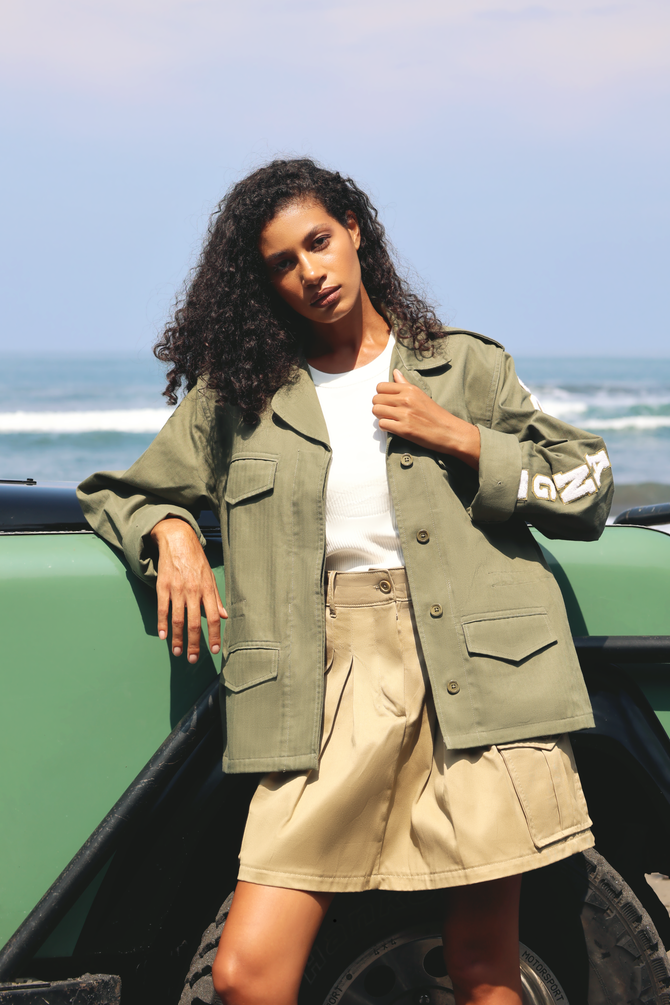
C56 Military Jacket
Assertive structure, integrated belt, premium material. The trench coat's ideal companion.
Discover →Pairing and Wearing Your Women's Trench Coat with Elegance
The women's trench coat is remarkably versatile. Here's how to intelligently integrate it into your wardrobe, according to your contexts and ambitions.
The Professional Look. Slip your trench coat on over dress pants and a fine knit sweater. This combination creates an undeniable presence in a professional context. The military details of the trench coat add a dimension of natural authority, without aggression. Complete with sober shoes — loafers, ankle boots, or pumps.
The Casual Chic Look. Layer the trench coat over raw denim jeans and a turtleneck sweater. This association marries the formal structure of the trench coat with the relaxation of denim. Add white sneakers or boots for a modern and accessible effect.
The Minimalist Look. A light trench coat, a white blouse, black pants. Nothing more. This sobriety is deeply elegant and demands little but achieves a lot. It's a silhouette you recognize on the sidewalk — a woman who masters her image.
The Timeless Elegance. Wearing a trench coat over a flowing dress or a midi skirt. The contrast between the structure of the trench coat and the softness of the dress creates a seductive visual tension. This combination lends itself to more formal contexts: cocktails, dinners, events.
The Deconstructed Adventure. An oversize trench coat, white jeans, street sneakers. This palette is regularly renewed by contemporary designers. It offers a young, urban, straightforward look.
The secret always lies in balance. If your trench coat is structured and formal, the rest of your look can be more relaxed. Conversely, an oversize trench coat tolerates more classic pieces.
Maintenance and Longevity of Your Women's Trench Coat
A quality trench coat, well maintained, will accompany you for 10, 15, or 20 years. This longevity requires little effort, but method.
Regular Cleaning. Brush your trench coat regularly with a soft brush — a natural bristle clothes brush works perfectly. This eliminates dust and surface residue. For minor stains, rub with a slightly dampened cloth and let air dry.
Full Washing. If washing is necessary, opt for professional dry cleaning, particularly if your trench coat has delicate linings or zippers. For linen or sturdy cotton trench coats, a delicate cold wash may be considered — seek advice from the manufacturer.
Storage. Always hang your trench coat on a good quality hanger — a wooden or velvet hanger maintains the structure better than a metal hanger. Keep it in a dry and airy place. In winter, light steam pressing (at a distance) can revive the fibers.
Preventive Repair. Regularly check seams, buttons, and fasteners. Small repairs done early prevent more significant damage later.
Colors and Seasons: Adapting Your Trench Coat to the Year
The women's trench coat comes in a classic but deeply thoughtful palette. Each shade tells a story and pairs with a specific season.
Natural khaki is timeless and versatile. It's the historical shade, that of the military trench coat that adapts to all seasons and all contexts. Light khaki suits spring and summer; deeper khaki for the rest of the year.
Light beige and off-white bring a special luminosity to spring and summer. They pair beautifully with linen pieces and pastel colors.
Navy blue and black offer absolute timelessness, ideal for autumn and winter. They effectively complement colder shades and thicker materials.
Camel is one of the most flattering shades. Warming without being dominant, it flatters all complexions and is admirably worn in autumn and winter.
FAQ: Your Questions About the Women's Trench Coat
What is the history of the women's trench coat?
The trench coat was born during the First World War as protective clothing for British officers. Originally designed for men, the trench coat gradually won over women after the 1920s, notably through the influence of fashion and actresses. The timeless design of the trench coat — its adjustable belt, structured shoulders, double-row buttons — makes it a universal classic that transcends gender.
What length of trench coat should a woman choose?
For a women's trench coat, the ideal length is between the knee and mid-calf. This flattering proportion elongates the silhouette while maintaining an elegant and timeless look. A slightly long trench coat also reinforces its natural authority. For petite women, a trench coat that doesn't exceed the knee better preserves proportions.
How to care for a women's trench coat?
A cotton or cotton-linen blend trench coat requires little maintenance. Regularly brush the fabric with a soft brush to remove dust. For light stains, clean with a damp cloth. For a full wash, opt for professional dry cleaning, especially if the trench coat has delicate linings. Always hang it on a good quality hanger to preserve its structure.
Can you wear a women's trench coat in summer?
Absolutely. Lightweight trench coats in fine canvas or linen can be worn without problem in summer. Choose light colors — beige, off-white, light khaki — and breathable materials. The trench coat then becomes an ideal transitional piece, perfect for cool evenings or brisk mornings. In Provence or on the coast, it's an ideal companion offering protection and elegance.
How to pair a women's trench coat with the rest of your wardrobe?
The women's trench coat is remarkably versatile. Slip it on over jeans and a wool sweater for a casual chic look. Layer it over an elegant dress for more formal occasions. With dress pants, it creates an essential executive look. The secret lies in the balance of textures and tones: let your look breathe without overloading it.
To explore the complete collection of sustainable Coulange 1918 clothing, see our sustainable clothing collection or discover our guide to the military parka. Looking for tips on other essentials? Browse our complete selection of articles on sustainable clothing or explore our safari jacket guide for other perspectives on chic adventure.