

Men's Coat: Complete Guide to Choosing the Model That Suits You
The men's coat is much more than a winter garment: it is the centerpiece of a neat men's wardrobe. Visible from the first glance, it defines your look even before you open your mouth. However, faced with the diversity of cuts, materials and styles available, the exercise of choice can quickly become labyrinthine. This article is designed to guide you – without compromise or superfluity – towards the coat that really suits you: the one you will wear for ten years.
Why the Men's Coat is the Most Profitable Clothing Investment
In a men's wardrobe, few pieces offer as good a return on investment as the coat. Worn from September to March, more than six months a year, it accompanies every outing, every meeting, every trip. Unlike shirts or shoes that wear out every day, a well-chosen and well-maintained coat can last a decade without betraying its age.
The equation is simple: spending 500 to 900 euros for an artisanally made French wool coat comes back, over ten years, to 50 to 90 euros per year. That's less than a pair of average quality sneakers that you'll replace every year. Sustainability is not high-end: it’s logic.
At Coulange, this conviction guides every coat we create in our workshop in France. Materials selected for their longevity, cuts designed to remain timeless, manufacturing designed to last.
The main families of men's coats
Before choosing, you need to know how to name it. Here are the most emblematic models of the men's wardrobe:
The peacoat is a double-breasted double-breasted coat, of navy origin, generally in thick wool. Its straight cut and structured shoulders give it a look that is both relaxed and neat. It goes just as well with jeans as it does with a suit. An absolute classic, it never goes out of style. Discover our collection of men's coats to see the Coulange interpretation.
The right coat (or overcoat) is the reference for the formal wardrobe. Long, structured, single-breasted, it fits the suit without suffocating it. It can be worn with a tie, a turtleneck or a simple white t-shirt depending on the mood of the day.
The parka and the bomber jacket are the allies of adventurers. Functional above all, they incorporate technologies for protection against bad weather while ensuring an assertive style.
How to Choose the Cut of Your Men's Coat
The cut is the first criterion, even before color or material. A beautiful, poorly cut fabric remains a bad coat.
Shoulders : the shoulder seam should fall exactly at the end of your shoulder, no more, no less. A coat with overhanging shoulders will be impossible to wear elegantly, regardless of its quality.
Length : a mid-length coat (up to the knees) is the most versatile. Short (pelvis length) coats are best suited to stocky figures. Long coats (calf length) are magnificent but require a certain amount of ease to wear them.
Falling on the back : when moving, when sitting, when raising your arms — a quality coat maintains its structure without pulling or wrinkling. This is the sign of a controlled cut and a well-constructed interior canvas.
Comfort with layers : your coat must be able to accommodate a thick sweater or blazer without restricting your movements. Always try it on with the bulkiest outfit you plan to wear underneath.
Subjects: The Great Classics and their Virtues
wool is the queen material of men's coats. Naturally insulating, breathable, resistant to wear and light humidity, it ages beautifully. Coulange works with French and European wools, sourced from partner spinners.
Cashmere combines surprising lightness with intense warmth. A pure cashmere coat is a connoisseur's investment — to be reserved for occasions where the care it requires can be afforded.
Treated cotton is the basis of the traditional trench coat. Waterproofed, it offers comfortable rain resistance and a very elegant appearance. See our guide dedicated to men's trench coat.
Technical subjects (nylon, Gore-Tex, Pertex) are used in the composition of parkas and adventure coats. Waterproof, lightweight, compressible, they meet the demands of extreme environments without sacrificing style — that's precisely Coulange's promise.
Colors: The Essentials of a Well-Constructed Locker Room
The camel is perhaps the most elegant color in the men's wardrobe. Warm, bright, it contrasts with dark winter outfits and goes with everything.
Anthracite or charcoal gray offers the ultimate versatility. Neither too dark nor too discreet, it goes just as well with an office suit as with weekend jeans.
The marine is the official color of the pea coat. Sober, structured, timeless — a navy coat will still be relevant in twenty years.
The black is dramatic and elegant, but less versatile than you might think: it clashes with brown and does not favor all complexions.
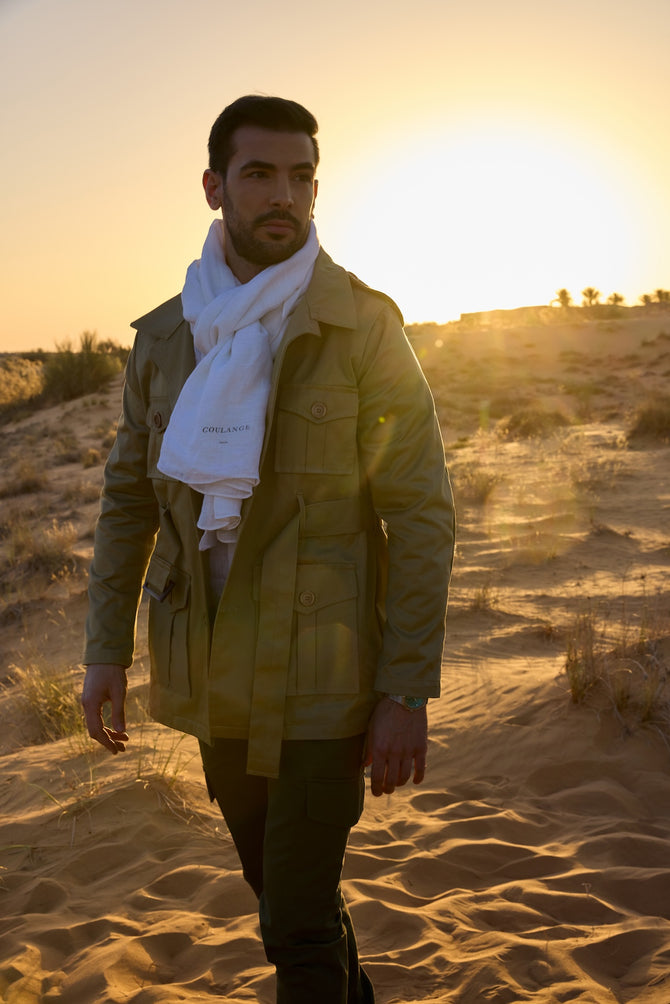
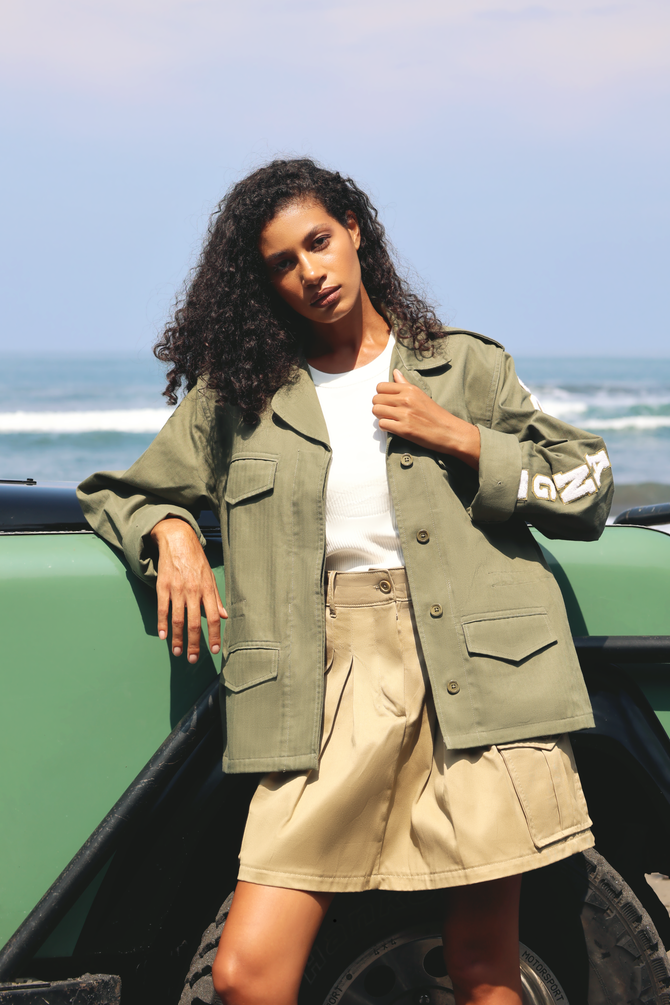
If you want a piece with strong personality, military khaki green or burgundy offer immediate character. This is the territory of men's military jackets that Coulange reinvented.
Maintenance: Making Your Coat Last Ten Years
Ventilate after each wearing. Hang your coat on a wide hanger in an open space one to two hours before putting it away. Natural fibers need to breathe.
Brush regularly. A boar hair clothes brush removes dust and revives wool fibers. Always brush in the direction of the fabric.
Dry clean, never machine wash (unless otherwise stated on the label). Annual dry cleaning is sufficient for most wool coats.
Store it properly. Use a sturdy hanger with a wide shoulder rest. In summer, protect it in a breathable cover — never plastic — to protect it from moths.
Which Coat for Which Use?
For urban professional use, a straight wool coat, single-breasted, in gray, navy or camel, is the safest choice. It goes well with suits, blazers and structured jackets.
For travel and active weekends, opt for a bomber jacket or a light, waterproof and compressible parka. The Coulange style is fully displayed here: pieces that cross continents without compromising their elegance.
For adventures and extreme cold, our aviator collection and Coulange parkas combine protective technologies and French artisanal manufacturing.
Investing Right: What the Price of a Coat Reveals
Between 80 and 900 euros, the price gap reflects fundamental differences. A coat costing less than 200 euros will often be made of synthetic materials. Its lifespan rarely exceeds two or three seasons.
Between 300 and 600 euros, we enter the territory of real wool coats, with a worked interior canvas and a careful finish. This is the most interesting beach for a first serious investment.
Beyond 600 euros, we touch on craftsmanship: exceptional wools, local manufacturing, custom construction. This is what Coulange offers — coats made in France, designed to last. Discover our selection of Coulange men's coats — each piece is a promise of longevity.
Frequently Asked Questions about Men's Coats
What length of coat should I choose for a man?
A mid-length coat (up to the knees) is the most versatile: it refines the silhouette and is suitable for both the city and on the go.
What material for a warm and durable men's coat?
Wool remains the benchmark material: naturally insulating, breathable and very durable. At Coulange, we favor responsibly sourced French wool.
How to maintain a wool coat?
Ventilate regularly, brush after each wear, dry clean once a season. Store on a wide hanger, never compressed.
What coat cut for a slim silhouette?
A straight coat or slightly fitted at the waist. A peacoat or double-breasted coat is particularly flattering.
Can you wear a men's coat with a suit?
Absolutely. Choose a mid-length coat in neutral tones (camel, gray, navy, black) and with a structured cut. Make sure the shoulders align perfectly.