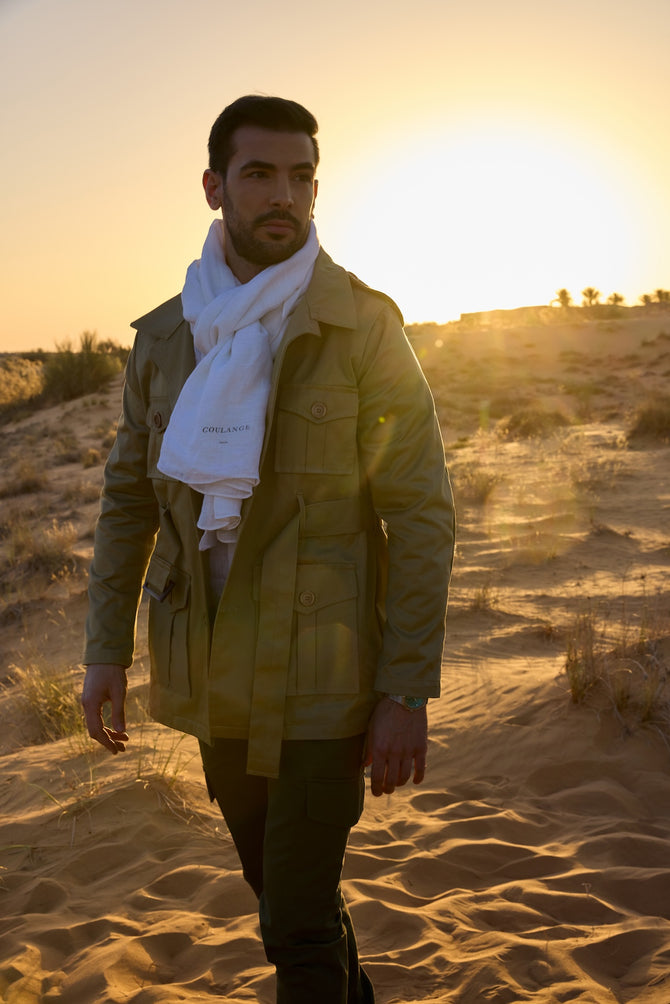
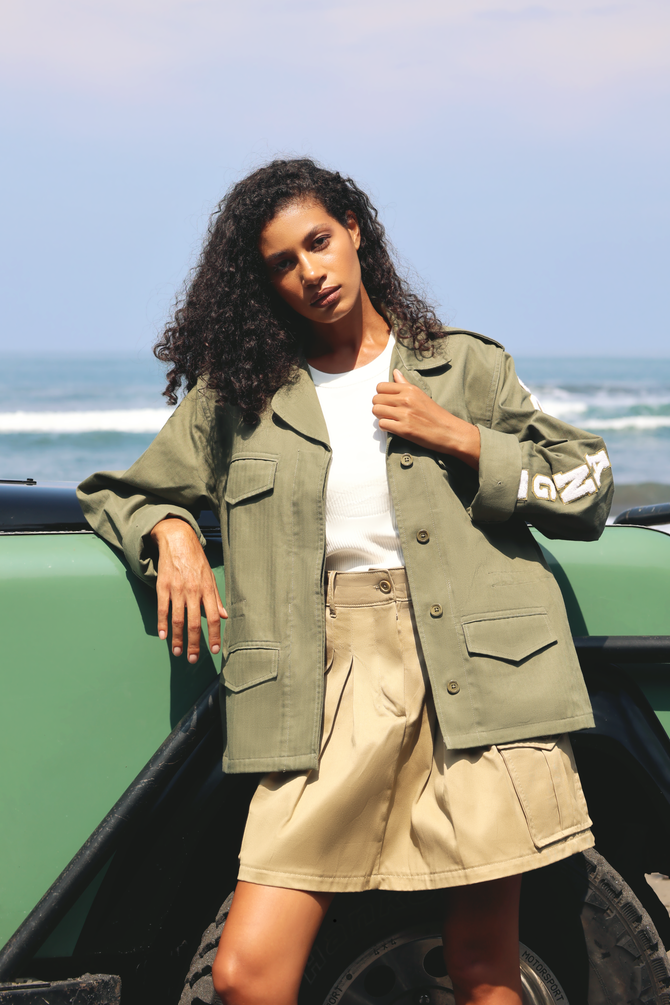




Men's Peacoat: the Guide to Choosing a Timeless Coat
The men's peacoat is one of the most timeless pieces of the men's wardrobe. Born from the maritime world, refined over the decades, it represents the perfect balance between class and practicality. This article explores the history, nuances of cut, materials and ways to wear the peacoat with confidence. Whether you're looking for your first pea coat or want to expand your collection, this comprehensive guide will help you make the right choice. Coulange 1918, French manufacturer of sustainable clothing, reveals the secrets of a piece that crosses generations without going out of fashion.
The Origins of the Caban: Between Sea and Civil Elegance
The peacoat has its roots in the maritime military world, but unlike the more rigid British peacoat, the French peacoat has evolved towards a more assertive and elegant line. In the 19th century, Dutch sailors and French soldiers adopted thick, structured coats to brave the elements. Gradually, this piece left the barracks to conquer the cities, worn by civilians in search of sartorial nobility.
What distinguishes the peacoat from its military cousins is its vocation to adapt to civilian life. It's not just functional; it is decidedly elegant. The proportions have been sharpened, with the cut lightly hugging the body to create a flattering silhouette. The pea coat embodies this French philosophy: beauty must serve function, never the other way around.
Anatomy of the Pea Coat: Understanding the Cuts
A well-cut pea coat can be recognized by several essential details. The ideal length goes down to mid-thigh, long enough to protect without adding bulk. The neckline is usually a classic lapel collar, thick and structured, capable of folding firmly without undulation. The shoulders should be slightly cocked but natural, precisely following your body shape.
The double buttonhole is characteristic: two rows of buttons, often six or eight, create a robust closure and a strong silhouette. This provision is not trivial; it offers a powerful visual structure while allowing different ways to wear it—fully buttoned for maximum correction, or partially open for more casualness.
The pockets, discreetly placed on the sides, must be accessible without compromising the line of the garment. A good peacoat cut gives a slight hold to the waist, which gives body without ever being tight. It's this subtlety that transforms a simple coat into a piece of character.

Coulange 1918
Cape Coat B33
A navy blue wool sheet with unrivaled comfort. Timeless, crossing the seasons with elegance, the Cape B33 redefines the modern peacoat.
Discover →Materials: Choosing the right wool
The material takes precedence over everything. A mediocre wool peacoat is already a planned defeat. Virgin wool remains essential: it offers natural thermoregulation, remarkable resistance and ages beautifully. Thicknesses vary according to season and use—a denser wool for winter, lighter for mid-season.
The classic peacoat requires wool of at least 500 grams per square meter to maintain its structure. Beyond that, the garment becomes too heavy for daily comfort. Wool-cashmere or wool-silk blends enrich the touch without compromising the fit. A good peacoat maintains its thickness evenly, without surface fluff—the sign of a noble material.
For demanding adventurers looking for durability, choose items made in France. French manufacturers have mastered this balance between lightness and robustness, guaranteeing that your pea coat will be a lifelong companion rather than a fleeting expense.
How to Wear the Pea Coat: Between Formality and Relaxation
The peacoat is a piece of remarkable versatility. Fully buttoned with a white shirt and chino pants, it propels you into timeless elegance, perfect for a job interview or an important evening. Combined with an ecru turtleneck sweater and raw jeans, it becomes much more accessible, almost adventurous.
In summer or mid-season, wear it open over a white t-shirt or light shirt. This ease creates a relaxed silhouette while maintaining a certain sartorial authority. A well-worn peacoat never requires justification—its presence is enough.
Don't hesitate to play with accessories: a fine wool scarf, a beret, a pair of sturdy leather shoes. The pea coat doesn't compete with anyone; it creates the context in which everything else makes sense. This is the advantage of true classics: they never dominate, they structure.
Maintenance and Longevity: Preserving Your Investment
A quality peacoat, properly maintained, can last two decades without fading. The secret lies in simple but regular gestures. Brush your peacoat once a month with a soft wool brush, using movements in the direction of the fibers. This removes dust and revives the natural shine of the wool.
For deeper cleaning, choose dry pressing or, if you prefer domestic washing, a very gentle cycle in cold water with a specialized wool-silk detergent. Never twist; wring gently and dry flat or hanging on a sturdy hanger, away from any direct heat source.
The pilling that may appear over time does not mean your pea coat is getting damaged—it's a natural reaction of the fibers. A small anti-pilling device solves this inconvenience in a few minutes. Finally, once a year, a preventive insecticide treatment protects the clothing during summer storage.

Coulange 1918
Cape Cashmere Coat U32
White cashmere sheet with synthetic fur collar. timeless high-end, French traceability, a cape that grows with you.
Discover →The Peacoat and the Adventurer's Life: Beyond Fashion
Unlike the ephemeral whims of fashion, the pea coat embodies a philosophy. It is the garment for those who refuse to compromise between style and substance. A chic adventurer is someone who understands that dressing well is not a frivolous expense, it is an investment in one's presence in the world.
The pea coat crosses continents without losing its relevance. Worn by explorers of the last century, still appreciated by contemporary architects, writers and travelers, it symbolizes a certain independence of mind. It's not a costume; it's a choice. A choice that you will renew every morning when you put it on.
Caban vs Alternatives: Knowing How to Choose
The military parka offers more functionality for extreme climates, while the safari jacket favors lightness and warm adventure. The trench coat, he plays on transparency and fluidity. But the pea coat is something else: it is the synthesis, the fundamental to which we always return.
If you are looking for a piece that will survive ten winters without weakening, that will be worn in a winter as well as in a winter, that will strengthen your silhouette without challenging it, the peacoat is your answer. It is an inherently durable piece of clothing: it lasts because it is well constructed and it pleases timelessly.
FAQs
What is the difference between a peacoat and a peacoat?
The peacoat and the peacoat are very close, but the peacoat is traditionally British military with a larger collar, while the peacoat is more civil and French. The cut of the peacoat is generally more assertive at the waist, and the proportions of the collar vary depending on the model.
How to maintain a wool peacoat?
A wool peacoat requires regular brushing with a soft brush to remove dust and revive the fibers. For washing, choose dry pressing or cold washing on a delicate cycle. Dry it flat or on a hanger, away from any direct heat source. Once a year, a preventive insecticide treatment is recommended.
What size peacoat should I choose for a man?
The pea coat should be worn slightly fitted at the shoulders, without constraint. It should go down to about mid-thigh. Prefer a close-fitting cut for a structured effect. If you are hesitating between two sizes, opt for the smaller one: the pea coat gains slightly in volume with use.
Can you wear a pea coat in summer or spring?
Absolutely. In the mild season, opt for peacoats cut from lighter wools or cotton blends. Wear it open over a white t-shirt or light shirt. It is also in mid-season that the peacoat expresses all its timeless elegance.
How do I know if my pea coat is good quality?
A good pea coat has dense, even wool, without superficial fluff. The seams must be even and reinforced at stress points. Buttons should be heavy and secure. The interior should show a quality, well-stitched lining. A quality pea coat will shine over time rather than deteriorate.