

Women's Bomber Jacket: The Complete Guide to Choosing and Wearing This Classic
The women's bomber jacket is one of the most versatile and history-laden pieces in the contemporary wardrobe. Born in the hangars of US military aviation in the 1940s, it has traversed the decades without losing an ounce of its stylistic power. Today, it embodies a rare balance: the ruggedness of the adventurer, the lightness of everyday life, and the elegance of a mastered piece. However, not all bombers are created equal. Materials, fits, finishes — quality criteria determine a piece's longevity and the precision of its allure. This guide gives you the keys to choosing a women's bomber jacket that meets your standards, wearing it with ease, and caring for it over the long term.
The Heritage of the Bomber Jacket: A Piece Born for Extremes
The history of the bomber jacket begins in the cockpits of American bombers during the Second World War. Crews needed a lightweight yet thermoregulating jacket, capable of operating in high-altitude conditions without restricting movement. The first versions — the B-15, then the MA-1 — were in nylon with a bright orange lining, designed to be visible in the case of ejection at sea. The front zip, ribbed cuffs, patch pockets: every detail served a precise function.
In the 1960s and 1970s, the bomber left military bases to become a symbol of counter-culture. British skinheads wore it as a sign of belonging. Civilian pilots made it their uniform. Then came fashion: Jean-Paul Gaultier, Helmut Lang, and more recently Phoebe Philo transformed its codes. The women's bomber emerged as a structuring piece — neither too demure nor too daring — that allows the woman who wears it to assert a distinct identity.
This historical depth explains why a good women's bomber doesn't age. It doesn't follow trends; it precedes time.
The Different Types of Women's Bomber Jackets
There isn't just one women's bomber, but a family of pieces with distinct characters. Knowing their differences allows for informed choices.
The MA-1 bomber is the absolute reference. In lightweight nylon, contrast lining, metal zip — this is the original model. It offers light wind protection and suits mid-seasons. Its slightly oversize fit is now revisited by many houses in more fitted versions.
The leather bomber embodies the rock side and maximum durability. Heavier, it requires specific care but gains character with age. The leather's natural patinas make each jacket a unique piece. It is worn unstructured over a dress, or structured over raw denim.
The quilted bomber is a winter version, lined with light wadding or down. It offers more thermal insulation without weighing down the silhouette. Ideal for cold mid-seasons, it often replaces the short coat.
The satin gold silk bomber is a more recent creation, born from the crossover between sportswear and haute couture. Less functional but highly elegant, it is worn in the evening or in semi-formal contexts. Its natural sheen creates a light effect that immediately elevates the silhouette.
Finally, the thick cotton or gabardine bomber represents a happy medium: robust, neutral, suitable for all occasions. This is often the material favored by French workshops seeking durability and versatility. To learn more about the technical materials used in tailoring, our guide on the women's aviator jacket details the essential selection criteria.
How to Choose Your Women's Bomber Jacket: The Criteria That Really Matter
Buying a women's bomber requires looking beyond the immediate visual effect to evaluate objective quality criteria.
The fit is the first challenge. A well-cut women's bomber should fall at the waist or just below, with precisely adjusted shoulders. Excess fabric at the shoulders distorts the silhouette. A fit that is too tight across the chest creates unsightly tension. Test mobility: raise your arms, cross them in front of you — the jacket should follow without pulling.
The material determines longevity and washing behavior. Beware of overly thin polyesters that crease quickly and lose their shape after a few washes. A good nylon bomber should have a minimum weight of 120 g/m². For noble textile materials, check the exact composition: pure cotton or cotton-polyamide blends resist better over time than cheap synthetic materials.
The finishes reveal manufacturing quality. Inspect the interior seams: they should be cleanly topstitched or overlocked. The zip should glide without catching — heavy metal sliders (YKK or similar) are a guarantee of durability. The elastic at the cuffs and waistband should be wide and firmly stitched. A bomber that frays after six months is not an investment.
The provenance is an increasingly important criterion for discerning buyers. A bomber made in France or Europe guarantees labor standards and technical requirements that offshore production generally cannot offer. The complete guide to women's parkas addresses this question of Made in France with precision.
How to Wear a Women's Bomber Jacket: Five Mastered Combinations
The women's bomber is a piece of contrast. Its stylistic power is born from the tension between its sportswear DNA and the pieces with which it converses.
1. Bomber + midi dress. This is the most effective and most photographed combination. A flowing midi dress — silk, viscose, or jersey — under a structured bomber creates a clash of volumes that works instantly. Wear block-heel mules to anchor the ensemble without weighing it down.
2. Bomber + tailored trousers. Replace the blazer with the bomber in an office together. Tailored trousers structure the silhouette, the bomber brings nonchalance without losing rigor. Choose harmonized materials — a gabardine bomber with wool trousers works better than an overly heterogeneous juxtaposition.
3. Bomber + raw denim + ankle boots. The obvious choice. Straight-leg unwashed jeans, a leather or thick cotton bomber, Chelsea boots: this is the most timeless look, the one that needs no justification.
4. Bomber + pleated midi skirt. A pleated silk or satin skirt creates a soft femininity that the bomber disrupts with unexpected elegance. Prefer neutral or monochrome tones so that the contrast of materials is the only element of surprise.
5. Bomber in layering. In winter, wear the bomber under a long coat or an oversize women's parka. The ribbed collar peeks out slightly and creates a depth effect in the silhouette. The gorpcore style has popularized this type of functional and aesthetic layering.
The Coulange Women's Bomber Jacket: French Craftsmanship, Real Durability
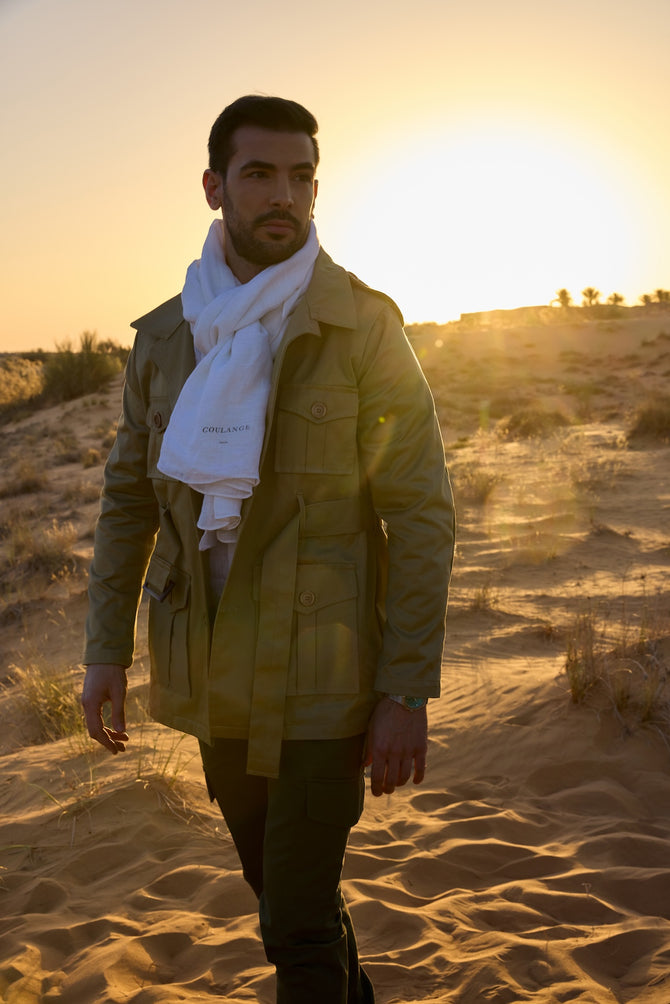
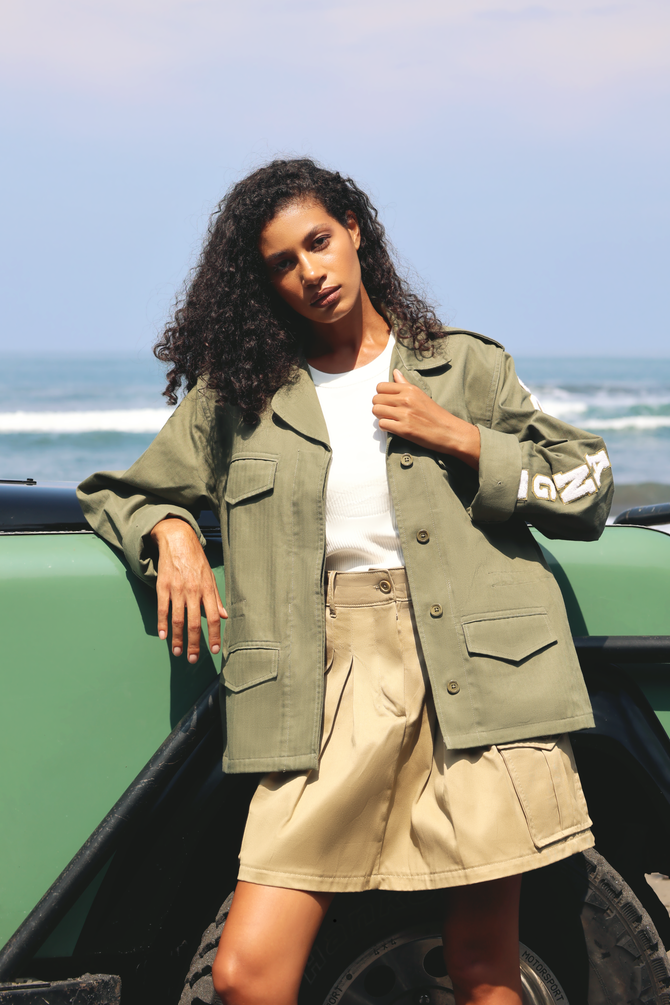
At Coulange 1918, the women's bomber is not a season-after-season fashion accessory. It is a piece designed to last, designed in our French workshop with materials selected for their resistance and their ability to age gracefully. Our patterns are developed in-house, tested on varied body shapes, and refined until the fit is right — neither restrictive nor shapeless.
Our bombers' lining is sewn with the same attention as the exterior. The zips are in metal, the eyelets in brass. Every seam is inspected before dispatch. This level of exacting standards is only possible because everything is done here, within sight.
Discover the Coulange 1918 women's bomber jacket →
Caring for Your Women's Bomber Jacket: The Right Steps for Longevity
A quality bomber deserves proper care. A few simple rules preserve the shape, material, and color over the long term.
For nylon gold polyester bombers, machine washing at 30°C inside out, on a delicate program with detergent without fabric softener, is generally sufficient. Remove it quickly after the cycle to avoid creasing. Dry flat or on a hanger, never in the tumble dryer.
For leather bombers, imperatively avoid water and the machine. A slightly damp cloth removes light soiling. Leather conditioning every six to twelve months nourishes the material and slows cracking. In case of deep stains, consult a professional.
For thick cotton or gabardine bombers, dry cleaning is preferred. Between cleanings, regularly air your jacket by hanging it in a ventilated space. Store it on a wide hanger, never folded, to maintain the shoulder structure.
If you wish to explore other technical jackets to care for with the same rigor, our article on the safari jacket Made in France covers the same principles for another iconic piece of the chic adventurer.
Frequently Asked Questions About Women's Bomber Jackets
What is the difference between a bomber jacket and a women's aviator jacket?
The aviator jacket, also called MA-1 or G-1, is typically in leather or thick nylon, with a fur or shearling collar. The bomber is a lighter, more modern evolution: shorter fit, ribbed cuffs, often a more sportswear finish. The two pieces share a common origin but have distinct characters.
Which women's bomber jacket to choose based on body shape?
For a V-shaped silhouette, a slightly oversized bomber balances the shoulders with a mid-length skirt. For an H-shaped silhouette, a cropped or fitted model creates definition. For an A-shaped silhouette, wear it open to elongate upwards. The ideal length sits at the waist or just below.
Is the women's bomber jacket suitable for all seasons?
A lightweight nylon bomber suit spring and summer. For autumn, opt for a thick cotton or gabardine version. In winter, a quilted or wool-lined model offers more insulation. It also integrates into winter layering under a parka or long coat.
How to wear a women's bomber jacket elegantly?
Elegance comes from contrast: pair the bomber with structured pieces in noble materials — tailored trousers, silk midi dress, pencil skirt. Avoid overloading with accessories. A single statement piece of jewelry is enough. The choice of shoes is decisive: a block heel or Chelsea boot anchors the ensemble in the chic register.
How to care for a women's bomber jacket so it lasts?
Depending on the material: delicate wash at 30°C for nylon, dry cleaning for noble materials, regular conditioning for leather. Always store on a wide hanger, never folded. Avoid the tumble dryer. These simple precautions significantly extend the lifespan of a quality piece.