



Men's Trench: The Complete Guide to Choosing and Wearing the Right Coat
The men's trench is one of the few pieces that have survived a century without losing an ounce of its prestige. Born in the mud of the trenches, adopted by British officers, then sublimated by cinema and fashion houses, the trench is today the coat of the man who refuses to choose between elegance and utility. But with the abundance of models — cuts, lengths, materials, colors — how to make the right choice? This guide gives you the keys to selecting a men's trench that matches your style and requirements.
History of the Men's Trench: From Trenches to Catwalks
The trench coat — literally "trench coat" — was born from the needs of British officers during World War I. Burberry, which had already patented waterproof gabardine as early as 1879, and Aquascutum dispute the paternity of the model. What they created was a functional piece designed for the most extreme conditions: double-breasted to block the wind, epaulettes to fix rank insignia, belt loops to hang equipment, a gun flap protecting the neck. Every detail had a reason to be.
Back in Europe after the war, soldiers kept their trench. Fashion took hold of it. In the 1940s and 1950s, Humphrey Bogart made it the uniform of the disillusioned detective. Audrey Hepburn made it romantic. Since then, the men's trench has never ceased to oscillate between utility and symbol — exactly where Coulange stands.
The Timeless Codes of the Men's Trench
A true men's trench is recognized by its constitutive elements. Far from characterless imitations, authentic pieces adhere to a precise grammar:
The double-breasted. Two rows of buttons — often horn or metal buttons — that close the coat tightly. It is the most visible distinctive sign of the trench.
The D-ring belt. It cinches the waist, defines the silhouette, and can be tied rather than fastened for a more relaxed look. A man who wears his trench unbuttoned but belted knows what he's doing.
The epaulettes. Inherited from military uniforms, they structure the shoulders and give the torso that unmistakable presence. If you seek this heritage in your wardrobe, you will also appreciate our article on the military parka Made in France.
The storm flap. This additional piece on the right shoulder reinforced rain protection for the soldier shouldering his rifle. Today, it is a sign of quality.
The button placket. It runs from the neckline to the belt buckle, adding an extra layer of waterproofing against wind and rain.
What Material to Choose for a Durable Men's Trench?
The material is the first criterion for the durability of a men's trench coat. Major brands have long imposed cotton gabardine — a twill, dense, naturally waterproof fabric due to the tight twist of the fibers — as the absolute standard. And for good reason: a quality cotton gabardine trench coat withstands 40 years of use with minimal maintenance.
In contrast to cotton gabardine, other materials are being introduced into collections:
Blended wool. For cold regions or harsh winters, a wool trench coat offers far superior thermal insulation. It slightly sacrifices waterproofing but gains in comfort and warmth. To be combined with a waterproofing spray.
Polyester or synthetics. Less expensive, lighter, often treated to be water-repellent at the factory. They age poorly and do not hold their shape beyond a few seasons. To be avoided if you are looking for a heritage piece.
Cotton-polyamide blends. An interesting compromise for brands looking to combine waterproofing and lightness. Longevity is lower than 100% cotton, but these models respond well to daily use.
At Coulange, the requirement for durability is non-negotiable. Our pieces are designed to withstand decades — not seasons.
Cut and length: finding your men's trench
The cut of a men's trench coat determines its overall visual impression. Too loose, it drowns the silhouette. Too fitted, it restricts movement and betrays its military origins. The right cut leaves space to layer a sweater or jacket without ballooning, while defining the waist once belted.
Long trench (up to or below the knee). The classic version, closest to the original models. It elongates the silhouette, offers better protection from the elements, and exudes natural authority. Ideal for tall sizes.
Mid-thigh trench (50–60 cm below the belt). The most versatile format. It suits most body types and adapts well both to the office and a weekend outing.
Short trench (above the knee). More casual, more urban. It works particularly well with slim jeans or chinos, in a casual-chic style. Be careful not to choose a model that's too short, which loses the trench coat's codes.

Coulange 1918
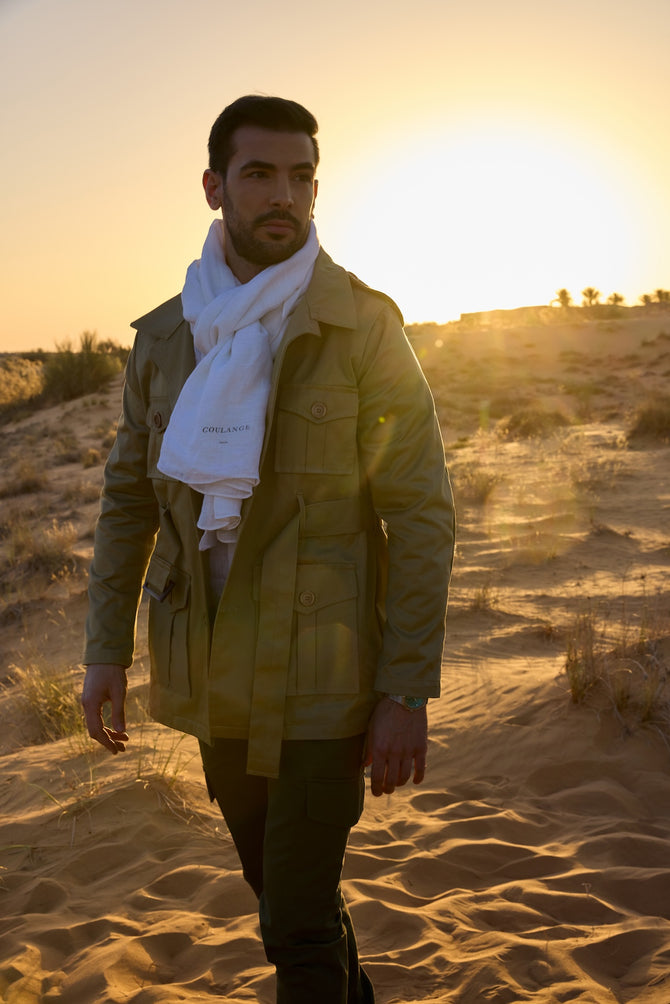
Trench coat M67 — Khaki Green
The adventurous trench coat from Coulange. Structured cut, waterproof, made in France. All the codes of the classic trench with the soul of an explorer.
Discover the Trench M67 →How to wear the men's trench: 4 coherent looks
The classic city. Camel beige trench over charcoal gray suit, white shirt, and brown derby shoes. Belt tied rather than buckled. It's the formula for the man who doesn't need to search.
The casual intellectual. Navy trench over an ecru turtleneck, raw indigo jeans, and leather chelsea boots. The spirit of the trench that falls into the weekend register without ever appearing neglected.
The chic adventurer. Khaki or olive trench over thick wool jacket, technical cargo pants, and premium hiking boots. This style embraces gorpcore without excess.
The relaxed formal. Stone-colored trench over suit blazer, white t-shirt, and sockless loafers in the mid-season. The art of dressing effortlessly.
Men's trench and sustainability: buy better, buy less
The men's trench is, by nature, a heritage piece. Bought in a good material, properly maintained, it is passed down. It's an anti-fast-fashion piece par excellence — provided you make the right choices from the start.
Favor the natural. Cotton, wool, sometimes linen for lighter versions. Natural fibers breathe, age with nobility, and can be repaired.
Check the craftsmanship. A trench sewn in Europe — ideally in France — guarantees quality standards that are increasingly disappearing in offshore production. Inspect the seams, buttonholes, flaps.
Choose a lasting color. Beige, camel, navy, khaki, and black are the five timeless men's trench colors. All "trendy" colors will be out of fashion in two seasons.
Discover our selection of sustainable men's clothing, designed to last and made in French workshops.
Trench maintenance: preserving your piece in the long term
Washing. At 30°C, delicate program, inside out. A neutral detergent without enzymes. Never strong spinning — take out by hand and reshape before drying flat or on a wide hanger.
Waterproofing. After each wash, renew the water-repellent treatment with a spray suitable for cotton. Apply on damp fabric, let dry, then activate with a hairdryer on hot setting 20 cm from the fabric.
Storage. Hang your trench on a wide wooden hanger, never on thin plastic which deforms the shoulders. In mid-season, store it in a breathable fabric cover, not plastic.
Repairs. Invest in repair rather than replacement — it is the very definition of sustainable clothing.

Coulange 1918
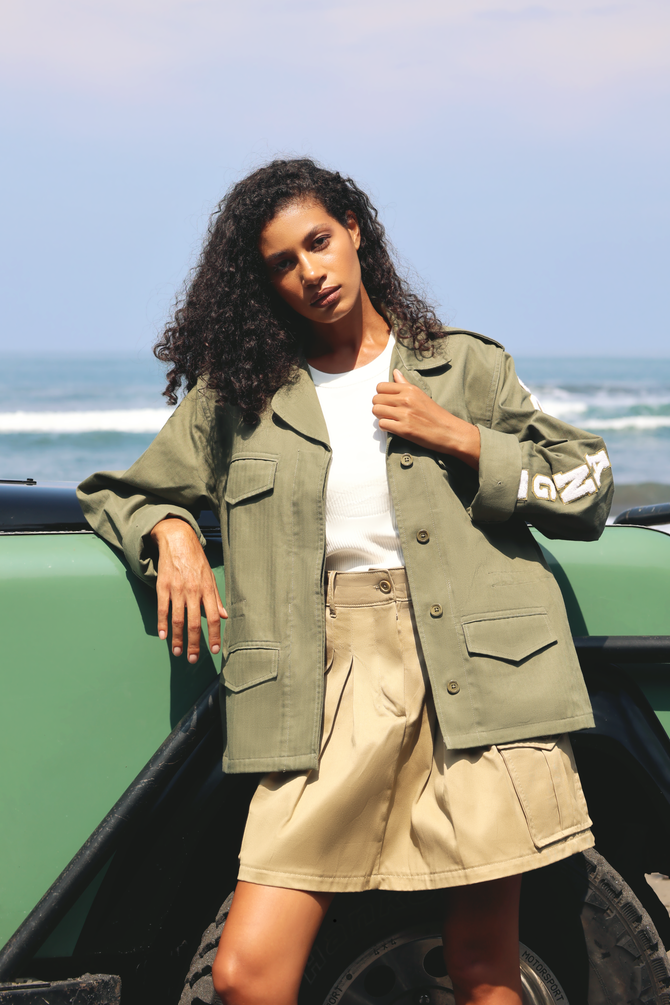
Officer Jacket B16
Military heritage at the service of contemporary style. Made in France, this jacket embodies the same values as the trench: rigor, durability, character.
Discover the Officer Jacket B16 →The Coulange trench: the legacy of the chic adventurer
Since 1918, Coulange has been making outerwear for men who refuse to choose between elegance and high standards. Our Trench coat M67 is the perfect example: structured cut, waterproof, made in France, with the soul of an adventurer. Parkas, safari jackets, blousons — all our pieces share the same philosophy: natural materials, careful craftsmanship, shapes that transcend fashion.
Explore our world and discover pieces designed to last as long as your taste for adventure.
→ Discover the Coulange 1918 collection
FAQ — Men's Trench
What is the difference between a trench and a raincoat?
The men's trench is a structured coat with double-breasted buttons and epaulettes, born in the military trenches of World War I. The raincoat is a more generic term for any garment designed to repel rain, without necessarily featuring the stylistic codes of the trench.
What length of trench should a man choose?
The mid-thigh trench (50–60 cm below the belt) offers the best balance between protection and style. For a more athletic silhouette, a knee-length model enhances the stature. Taller sizes benefit from choosing a long trench to elongate the line.
How to care for a cotton trench?
Wash your cotton trench at 30°C with a mild detergent, inside out to preserve the color. Reinforce its waterproofing after each wash with a water-repellent spray suitable for cotton. Iron it while still slightly damp to restore its impeccable drape.
Is the men's trench coat suitable for all seasons?
Yes. The lightweight gabardine cotton trench is perfect for spring and autumn. In winter, choose a wool-lined model or layer it yourself with a thick turtleneck and a wool jacket. Some modern models incorporate a zipper or removable lining for maximum versatility.
Where to find a quality Made in France men's trench coat?
Coulange 1918 offers their Trench coat M67, designed in a French workshop, made from natural and durable materials. A heritage piece crafted to last for decades.