

The Safari Jacket: From the Battlefield to the Men's Wardrobe
The safari jacket – or saharienne, as it is called in France – is far more than a garment. It is a piece of history that has made the leap from military use to the timeless men's wardrobe. At Coulange 1918, we proudly carry on this heritage, crafting every safari jacket in our Paris workshop with the same care that has distinguished our manufacture for over a century.
The Military Origins of the Safari Jacket
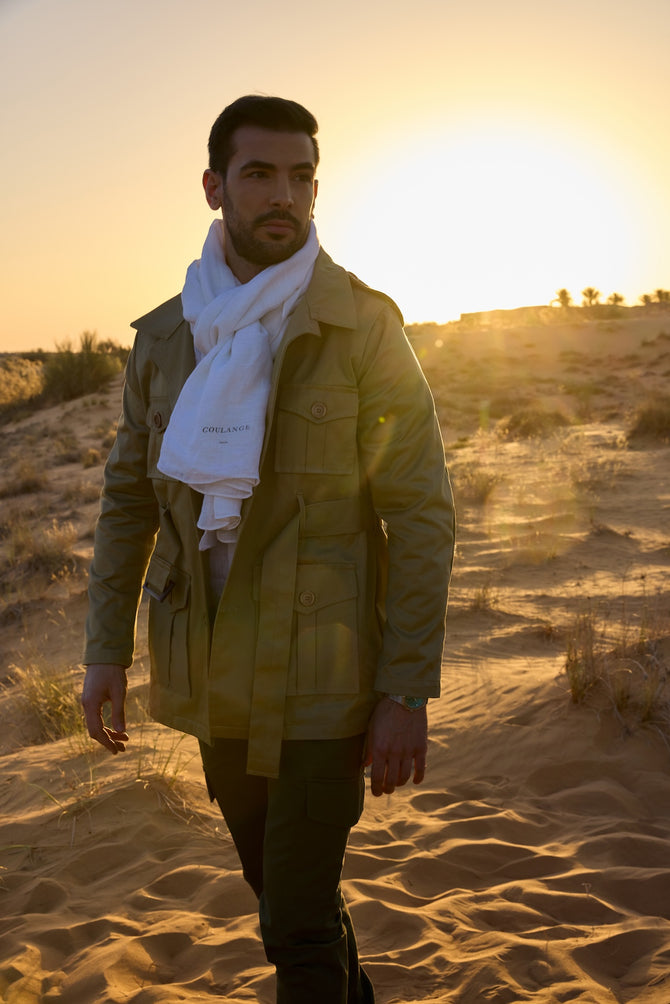
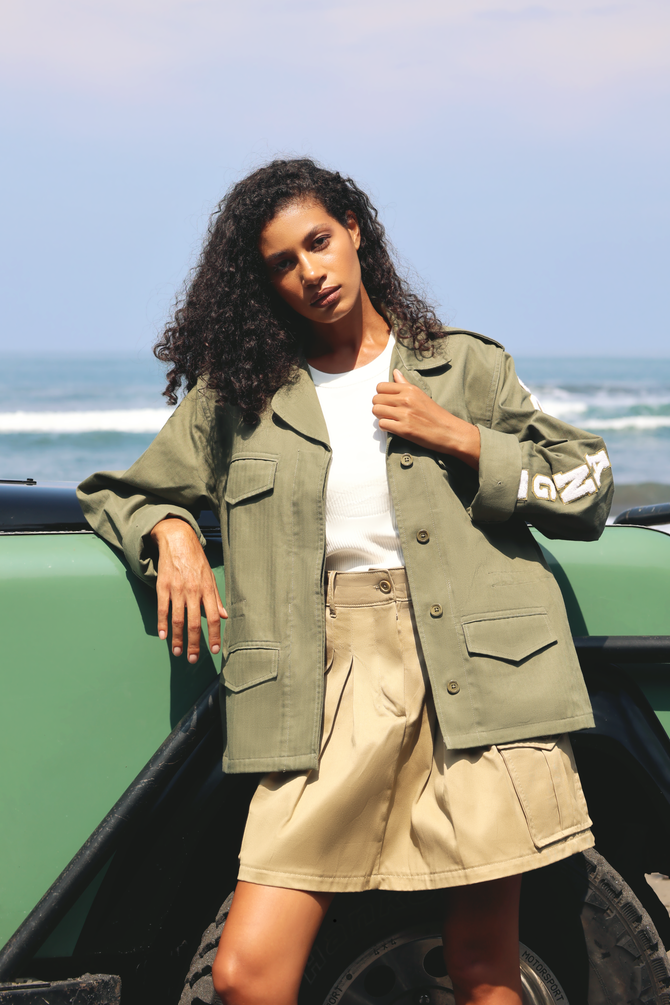
The roots of the safari jacket date back to the late 19th century, when the British and French armies introduced lightweight, functional field jackets for use in hot climates. The iconic M47 model of the French army, designed for the Indochina War, set the standard: four patch pockets, a waist belt, shoulder epaulettes, and a lightweight yet durable cotton fabric. These features define the safari jacket to this day.
The name "saharienne" refers to its use in North Africa, where officers wore the jacket as a practical alternative to heavy wool uniforms. It is no wonder that the English equivalent is called the "Bush Jacket" – a jacket for the wilderness, combining freedom of movement and functionality.
From Uniform to Style Classic
In the 1960s and 70s, the fashion world discovered the safari jacket. Designers like Yves Saint Laurent made it a symbol of a relaxed, cosmopolitan lifestyle. Actors and adventurers wore it alike – and suddenly, the field jacket was no longer reserved for soldiers but became a global style phenomenon.
Today, the men's safari jacket is a staple of the refined male wardrobe. It stands for masculine elegance without excessive formality – precisely the balance that defines the modern gentleman.
What Makes a True Safari Jacket?
You can recognise an authentic safari jacket by these features:
- Four patch pockets – two at chest height, two at hip height, with flaps and buttons
- An integrated belt – cinches the silhouette and emphasises the masculine shape
- Shoulder epaulettes – a legacy of military design
- Lightweight, hard-wearing fabric – cotton twill or linen, ideal for warm weather
At Coulange 1918, we use exclusively natural materials – cotton from Italy, linen from Normandy – and manufacture every safari jacket in France. No mass production, no compromises.
How to Wear the Safari Jacket Today
The safari jacket is remarkably versatile. For a casual summer look, pair it with a white linen shirt and chinos. In autumn, wear the jacket open over a lightweight roll-neck jumper – a look reminiscent of the French Riviera.
For more formal occasions, choose a cotton twill safari jacket in subdued colours – olive green, sand, or navy blue – and combine it with tailored trousers and quality leather shoes. The belt should always be worn fastened to emphasise the waist.
Coulange 1918 – French Craftsmanship for Over a Century
Since 1918, Coulange has been crafting high-quality men's clothing in France. Our safari jacket collection honours the military heritage of this garment while reinterpreting it for the discerning man of today. Every seam, every button, and every pocket is inspected by hand by experienced tailors in our Paris workshop.
Discover the full collection – from the classic M47 Safari Jacket to modern interpretations in linen and cotton. Each piece carries the heritage of a century of French tailoring.
A safari jacket is not a passing trend. It is an investment in timeless style – and that is exactly how we build it.