

Linen Dress for Women: The Complete Guide to Choosing and Wearing It
The linen dress for women is, every summer, the most coveted piece in the wardrobe — and one of the most delicate to choose correctly. Too transparent, poorly cut, made from mediocre linen, or worn in the wrong context, it can quickly undermine a silhouette rather than enhance it. Well chosen, however, it becomes that timeless piece you slip on over a swimsuit, that you belt for a dinner on the port, or that you pair with a Saharienne jacket for a day exploring hilltop villages. This guide gathers everything a discerning woman needs to know before adding a linen dress to her wardrobe — from fabric quality to the cuts that truly flatter, through the colors that endure and the care that preserves the piece from one summer to the next.
Why Linen Remains the Queen Fiber of Summer
Linen has been cultivated in France since the Middle Ages, and France today produces, alongside Belgium and the Netherlands, nearly 75% of the world's linen. This plant fiber possesses qualities found nowhere else: it absorbs up to 20% of its weight in moisture without appearing wet, regulates body temperature naturally, and grows with virtually no irrigation or pesticides. From a clothing perspective, linen has that dry drape, that slight texture, and that unique way of catching light that immediately distinguishes a noble piece from a viscose imitation.
Compared to cotton, linen is more breathable and dries much faster. Compared to silk, it is more robust and infinitely easier to care for. And unlike synthetic fibers, it doesn't retain odors and develops a beautiful patina over washes. A linen dress is never a seasonal purchase: it is an investment in a wardrobe built to last.
Recognizing a Quality Linen Dress: The Six Criteria That Matter
Composition. Favor pure linen (100%) or, failing that, a predominantly linen blend (at least 70%) with a touch of cotton to soften the drape. Beware of compositions dominated by synthetics, sold under the "linen look" label: they offer none of the thermoregulatory qualities of the fiber.
Fabric weight. A linen dress that is too light (below 130 g/m²) will be transparent, shapeless, and will crease chaotically. For a fluid dress, aim for a weight between 150 and 180 g/m²; for a structured shirt or safari dress, between 180 and 220 g/m². This is the ideal balance between summer lightness, opacity, and hold of the cut.
Weave. A well-woven linen shows a regular grain, without coarse irregularities or running threads. Hold the fabric up to the light: the regularity of the weave is an excellent indicator of the quality of the yarn used.
Finishing. Turn the dress inside out and examine the seams. Regular topstitching, flat-felled seams on the sides and along the sleeves, clean collar and cuff lining, buttons in mother-of-pearl or corozo firmly sewn (not glued): these details immediately distinguish a workshop piece from industrial production.
Opacity. In the store, place the fabric flat against your hand: if you clearly see the contours of your fingers, the fabric is too light for a dress you'll wear during the day. A good linen dress should let you guess the skin at most, never reveal it.
Origin. A dress woven and crafted in France or Europe, with clear traceability from yarn to assembly, guarantees you not only superior longevity but also respectful manufacturing. Today, this is the criterion that weighs most heavily in the long run.
The Cuts That Flatter Every Body Shape
A linen dress is chosen as much for its cut as for its material. Here are the four main ones and their ideal body shapes.
The shirt dress. Borrowing all the codes of the masculine shirt — collar, button placket, cuffed sleeves — it is the most versatile linen dress. It suits all body shapes and fits into a city wardrobe as easily as a seaside one. Belting it is a matter of taste but always structures the silhouette.
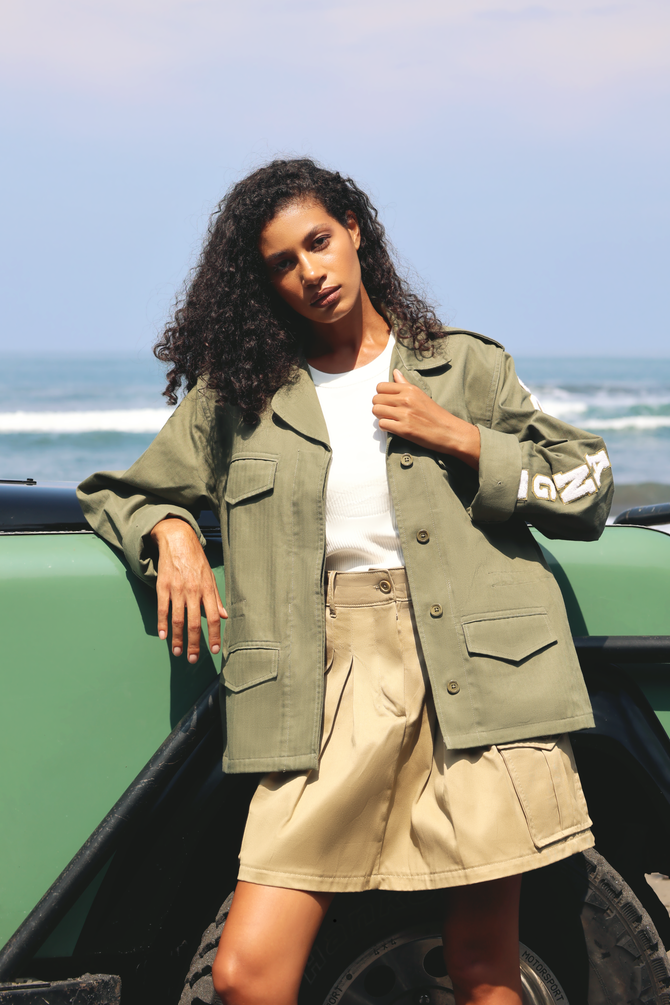
The safari dress. Direct heir to exploration clothing, it features four flap patch pockets, epaulettes, and a waist belt. It is the most characterful cut, which shapes the shoulders and draws the waist with precision. It particularly flatters rectangular silhouettes (H shape) and inverted triangles.
The wrap dress. Crossed front, tied at the waist, it adjusts to every morphology and creates a V-neckline that elegantly lengthens the neck. It is the most universally flattering cut, which suits round silhouettes as well as athletic ones.
The trapeze or A-line dress. Flared from the chest or waist, it floats around the body without constraining it. Ideal for hot days and seaside evenings, it suits all silhouettes but particularly flatters A-shape and H-shape morphologies.
Whatever the cut, one rule prevails: the shoulders must fall just right, the shoulder seam aligned with the tip of your shoulder. A poorly positioned dress loses all its hold, even in the most beautiful material.
Timeless Colors and Those to Avoid
Linen lends itself admirably to natural tones, which reveal all the depth of the fabric and the subtlety of its grain. Five colors endure summer after summer.
White and ecru are the quintessential linen dresses: sunny, luminous, they evoke the Mediterranean wardrobe and pair with everything, from natural leather sandals to a straw bag. Sand beige or string brings subtle warmth and enhances tanned skin. Light blue or sky blue is the most versatile option for urban use: it works as well for the office as for the beach. Light khaki or soft olive brings an expeditionary note, perfect with leather sandals and a canvas bag. Finally, terracotta and rust brown are the ideal colors for late summer and shoulder-season travel.
Avoid loud prints, heavy stripes, and very saturated colors: the linen dress draws its beauty from its material, never from its pattern. A well-dressed woman in linen is recognized first by the correctness of her tones and the coherence of her silhouette.
How to Wear the Linen Dress for Women: Three Proven Silhouettes
For daytime, Mediterranean version. White midi safari dress, natural leather strap sandals, wicker or light leather basket bag, hand-woven Panama hat, tortoiseshell sunglasses. A fine gold chain, a simple watch with a leather strap. This is the silhouette of seaside lunches, strolls through hilltop villages, and late afternoon on the terrace. To go further on the register of summer linen, our complete guide on linen trousers for women offers a useful parallel reading for composing a coherent summer wardrobe.
For the city, explorer version. Khaki or olive linen dress, belted at the waist, smooth leather loafers or derbies, structured brown leather bag. A fine metallic watch, a scarf tied as a headband. A safari jacket draped over the shoulders for office and museum air conditioning. This is a silhouette that claims the utilitarian heritage of adventure clothing while remaining perfectly urban — the same coherence as our guide on the saharienne jacket for women, distilled into a single piece.
For the evening, dressed summer version. Navy blue or ivory linen dress, fine pumps or heeled sandals, leather belt, smooth leather clutch. A matte lipstick, fine yellow gold jewelry. This silhouette draws inspiration from a Mediterranean classicism that has lost none of its modernity and that can be found, extended to the entire summer wardrobe, in our guide to wearing the linen jumpsuit in summer.
Linen, Washed Linen, Blended Linen: Decoding the Variants
Three terms are regularly confused on labels. Classic linen offers the cleanest drape and maximum breathability; it is the reference choice for a summer dress. Washed linen hasne undergone a softening treatment that makes it softer to the touch from the first wear, at the cost of slightly more pronounced creasing; it is an excellent option for a dress worn daily. Blended linen (linen-cotton, linen-viscose) reduces creasing and softens the drape, but reduces breathability; to be reserved for very structured dresses or mid-season pieces.
In a well-constructed summer wardrobe, the linen dress is not an isolated piece: it naturally dialogues with a saharienne jacket draped over the shoulders, a linen shirt tied at the waist, or layered over light trousers for cooler days. The purchasing logic is the same as for other flagship pieces of the season, as illustrated by our guide on the linen shirt for men: noble materials, clean cuts, natural, timeless colors.
Caring for Your Linen Dress to Keep It for Ten Summers
A quality linen dress requires careful but reasonable care. Wash it at 30°C maximum, inside out, with a mild detergent without fabric softener — the latter weighs down the fiber and makes it lose its dry drape. Avoid the dryer, which shrinks linen and breaks its fibers. Hang the damp dress on a padded hanger, pulling slightly at the seams and waistband so it dries in shape. For very high-quality, lined and structured dresses, dry cleaning remains the safest method.
For ironing, iron linen while still slightly damp, with a hot iron, using a pressing cloth so as not to make the material shiny. If you prefer the aesthetic of naturally creased linen, make do with a pass of the iron on the waistband, buttons, and hem: it is largely enough to preserve the line of the dress. Off-season, hang it on a shaped hanger rather than folding it: linen marks easily at the folds, and a dress stored flat will lose its structure more quickly.
The Coulange Linen Dress: French Elegance from the Adventure Wardrobe
At Coulange, the linen dress is one of the emblematic pieces of the feminine summer wardrobe. Our U53 Saharan Dress is crafted in our workshop in Mayenne, cut from a 100% Italian linen fabric carefully chosen to ensure hold, opacity, and freshness. Signature golden buttons, four patch pockets, waist belt, lightly marked shoulders: every detail is designed to structure the silhouette without constraining it. Worn alone in summer, complemented by our Saharan Jacket in the shoulder season, or layered over our B45 Linen Trousers for shoulder-season travel, it composes an immediately recognizable chic explorer silhouette — understated, structured, deeply anchored in French craftsmanship. To explore the codes of the revisited military wardrobe for women, our guide to military style in summer offers a complementary read useful to any woman who composes her summer wardrobe with discernment.
FAQ About the Linen Dress for Women
Can a linen dress be worn to the office?
Yes, provided you choose a clean cut (shirt dress, saharienne dress), a sober color (navy, beige, khaki), and accompany it with structured accessories. With a jacket draped over the shoulders for air conditioning, it very well replaces a cool wool dress on hot summer days. Reserve white and ivory for more casual days or creative settings.
Should you take your usual size in a linen dress?
Yes, generally. Linen relaxes very little after washing and the cut is designed for the material. Avoid sizing up for comfort: you will lose the structure of the drape and the precision of the cut. Check especially the length, the waist position, and the shoulder width, three determining parameters for the final result.
Does a linen dress really have to crease?
Creasing is one of linen's signatures: it is what distinguishes it from synthetic fibers that imitate its appearance. Good linen creases nobly, in soft folds that largely disappear after a night on a hanger. It is a signature to accept, even to claim in a clothing universe too often dominated by rigidity. For a very dressed dress, a higher fabric weight and a structured cut limit considerably visible crease.
How to prevent a light linen dress from becoming transparent?
Choose a sufficient fabric weight (at least 160 g/m² for a summer dress, 200 g/m² for a structured dress) and a tight weave. Prefer partially lined models, notably at the bust and down to the knee. In the store light, press the fabric against your hand: if you clearly see the contours of your fingers, the fabric is too light for a quality dress.
What is the difference between a linen dress and a cotton dress for summer?
Linen offers superior breathability, a drier drape, and far greater longevity than cotton, which sags more quickly and loses its color over washes. Cotton interesting remains for very soft dresses worn daily, but linen remains the reference choice for an investment piece intended to last several summers.
Discover our women's collection in our collection.