

The women's linen trouser is, each summer, one of the most coveted pieces in the wardrobe — and one of the most poorly chosen. Too wide, too translucent, too creased, badly cut: this supposedly simple garment can quickly become a disappointment if you stop at the first label you see. Yet, well selected, the linen trouser is undoubtedly the most elegant summer piece there is: naturally thermoregulating, fluid without being sloppy, versatile from morning to evening. In this guide, we cover everything you need to know before purchasing — fabric quality, flattering cuts, timeless colours, ways to style it — so that your linen trousers become a piece you wear for ten summers in a row, and not a false good idea from the spring.
Why linen remains the queen fabric of summer
Linen has been cultivated in France since the Middle Ages, particularly in Normandy and the Hauts-de-France, which produce nearly 75% of the world's linen. This plant fibre has three qualities found nowhere else: it absorbs up to 20% of its weight in moisture without appearing wet, it naturally regulates body temperature, and it requires virtually no water or pesticides to grow. In clothing terms, linen has that dry drape, that slight texture, that way of catching the light which immediately distinguishes a quality piece from a viscose imitation.
Compared to cotton, linen is more breathable and dries much faster. Compared to silk, it is more robust and infinitely easier to care for. And unlike synthetic fibres, it does not retain odours and develops a beautiful patina with washing. It is precisely this honesty of the material that makes it a central piece of a discerning woman's summer wardrobe. To go further on the virtues of this fibre, our feature on summer fashion accessories in linen and cashmere details the best-suited uses for each piece.
Recognising quality linen trousers
Not all trousers labelled "linen" are equal. Here are the criteria to examine before buying.
The composition. Look for pure linen (100%) or, failing that, a predominantly linen blend (at least 70%) with a little viscose or cotton to soften the drape. Beware of "linen-polyester" blends which lose all the thermoregulating qualities of the fibre.
The weight. Linen that is too light (under 150 g/m²) will be transparent and crease in a disorderly way. Aim for a weight between 180 and 240 g/m²: this is the right compromise between lightness and hold.
The finishes. Turn the trousers inside out. Straight, sturdy seams, cotton pocket lining (not synthetic), hand-sewn buttons, a clean hem: these details betray the artisan workshop and guarantee durability.
The origin. Choose linen woven and made in France or Europe. Yarn traceability is today the best indicator of quality — and the guarantee of respectful manufacturing.
The cuts that flatter every body shape
Linen has a drape of its own that flatters the cut of a trouser — provided you choose yours well. Here are the four cuts to know.
The high-waisted pleated trouser. This is the most universal cut: it lengthens the leg, marks the waist and instantly gives a polished look. Ideal on A or X silhouettes, perfect from the office to a summer dinner.
The straight fluid trouser. More understated, it resembles the cut of a chino but with the suppleness of linen. Very flattering on long legs, it works as well with flat sandals as with a wedge espadrille.
The wide palazzo trouser. Airy, it evokes Mediterranean holidays. Perfect on slender silhouettes; to be worn with a close-fitting top to balance the volume.
The carrot or tapered trouser. More structured, slightly narrowed at the ankle. A good option for figure-8 silhouettes or for those seeking a more modern alternative to the classic trouser.
Whatever cut you choose, two rules apply: a high waist always works better than a low waist in linen (which will tend to drop and crease at the waistband), and the hem should just graze the top of the foot — never drag on the ground.
The timeless colours to favour
Linen lends itself particularly well to natural shades, which bring out all the depth of the fabric. Four colours transcend the seasons without ever tiring.
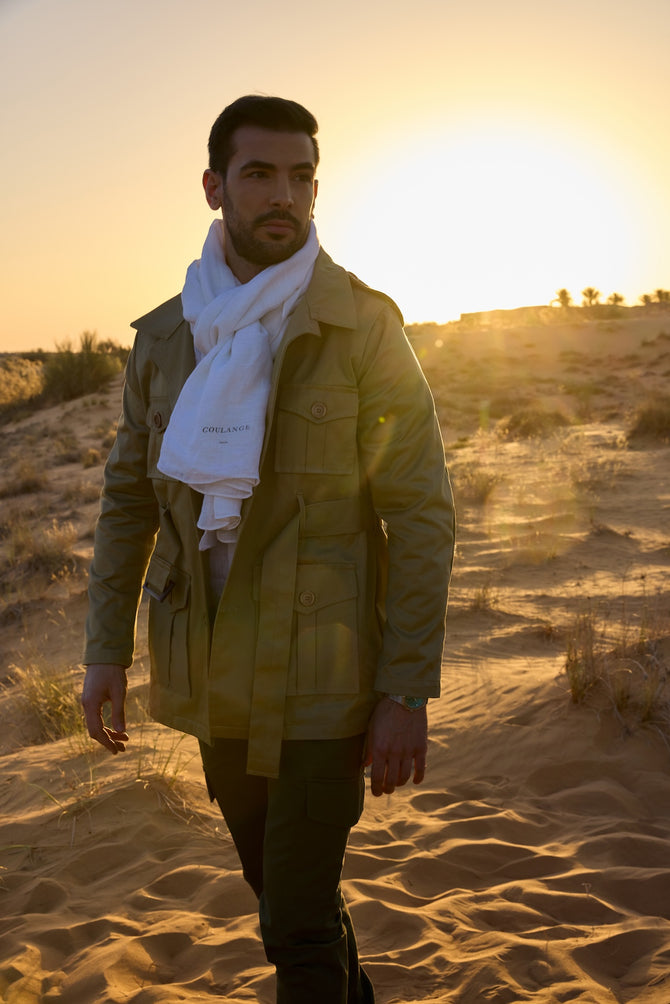
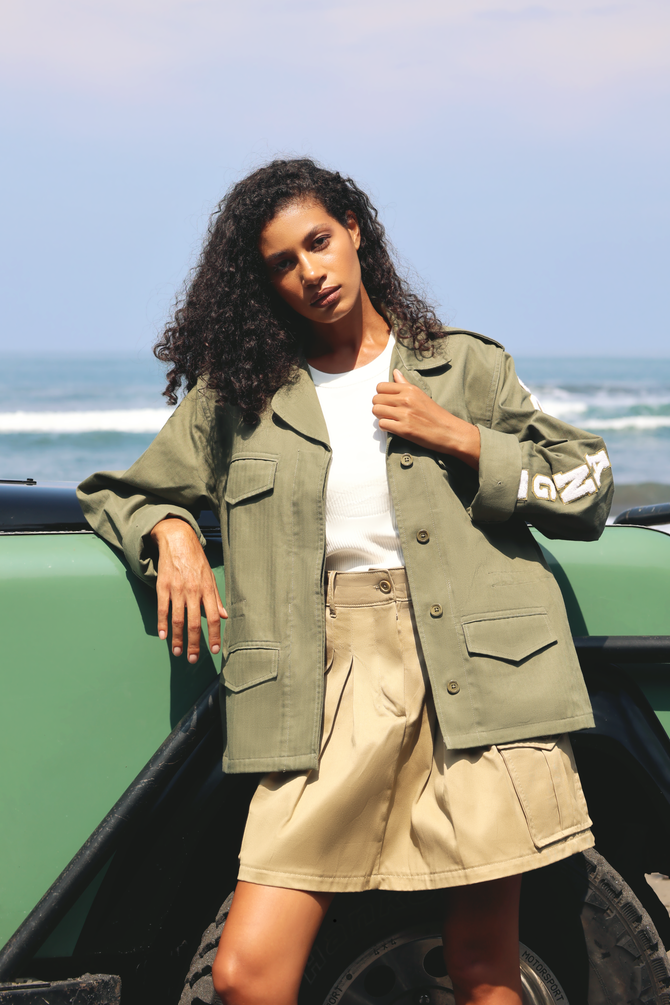
Off-white or ecru remains the most solar and timeless option — a classic of the summer wardrobe. Sand beige brings warmth and pairs with absolutely everything. Light khaki or soft olive gives an adventurer vibe, perfect with a white top and braided sandals. Finally, navy blue or midnight blue is the ultimate chic all-rounder: it extends the linen trouser to more formal occasions.
Avoid however loud prints and very saturated colours: linen is a noble fabric that stands on its own. Its beauty lies in the subtlety of its texture, not its graphic surface.
How to wear women's linen trousers: three silhouettes to recreate
For daytime, an urban version. High-waisted beige linen trousers, oversize white cotton shirt tucked in at the front, fine natural leather belt, leather loafers or flat sandals. A canvas messenger bag completes the ensemble. This is the perfect silhouette for a city lunch or a workday in a warm atmosphere.
For the seaside, a chic adventurer version. Wide ecru linen trousers, short-sleeved Breton top or cotton jersey T-shirt, espadrilles, panama hat. You can draw inspiration from our guide to wearing the linen jumpsuit in summer: the same logic of fluidity and natural materials applies to the trouser. This silhouette crosses the decades without a wrinkle.
For the evening, an elegant version. Straight navy blue linen trousers, silk top or fluid camisole, fine-heeled sandals, leather cuffs. A tailored jacket thrown over the shoulders transforms the ensemble into a dinner outfit. Linen is not reserved for daytime; well styled, it rivals the most formal pieces. To go further on the art of composing an elegant summer outfit, consult our complete guide to elegant summer style.
Trousers, skirt or jumpsuit: what to choose this summer?
The linen trouser is not the only central piece of the summer wardrobe. The linen skirt offers a more airy and slightly more formal alternative; the linen jumpsuit, for its part, radically simplifies putting together an outfit. Our guide to wearing the linen skirt in summer details the cuts and combinations that work. In practice, these three pieces complement each other: trousers for active days, a skirt for Sunday lunches, a jumpsuit for travel — and the same fabric unifies your entire summer wardrobe.
Caring for your linen trousers to keep them for ten summers
Linen requires little maintenance but a few good habits. Wash at 30°C maximum, inside out, with a mild detergent (ideally without fabric softener which weakens the fibre). Avoid the tumble dryer: hang damp and pull at the seams so they dry in shape. If you iron, do so slightly damp, with a hot iron and a pressing cloth — but know that linen owns its creases: that is indeed all its nonchalant elegance.
Stored flat or hung on a thick hanger, your trousers will survive the seasons. And the more you wear them, the softer and more comfortable they become: it is one of the rare materials that genuinely improves with time.
The Coulange linen trouser: the French art of the summer wardrobe
At Coulange, the linen trouser is made in our workshop in Mayenne from European linen woven to demanding standards. High-waisted pleated cut, cotton pocket lining, French seam: every detail is designed for it to last and age well. Our B45 Linen Trouser embodies this philosophy of the chic adventurer — a piece you wear as easily for a seaside weekend as for a terrace lunch, and which you bring out summer after summer without ever tiring of it.
FAQ about women's linen trousers
Do linen trousers really crease a lot?
Yes, linen creases — it is its nature and precisely what distinguishes it from synthetic materials. A weight between 180 and 240 g/m² limits the "crumpled" effect and gives noble folds rather than disordered ones. Over time, linen develops a patina and the creases become increasingly supple.
Can linen be worn to the office?
Absolutely, provided you choose a clean cut (pleated, high-waisted, adjusted hem) and a sober colour like navy, beige or off-white. Paired with a cotton shirt and loafers, it offers a professional yet summery look.
Is linen transparent?
It all depends on the weight. Lightweight linen (under 150 g/m²) can be transparent against the light; quality linen (180 g/m² and above) is perfectly opaque, especially in natural colours.
How to prevent linen trousers from deforming at the knees?
Choose structured cuts (pleated, tapered) rather than very close-fitting cuts. Wash at low temperature and dry hung in the open air: linen naturally regains its shape provided it is not put through the tumble dryer.
When is the best time to buy linen trousers?
Ideally in April or May, just before the peak of the season — the best pieces sell out quickly and natural colours are rarely restocked. Buying early also allows you to enjoy the trousers from the very first warm days.
Discover our trousers and skirts in our collection.