




Used since the early 20th century by naval forces, watch jackets were specially designed for soldiers serving on ship decks. The term "watch" refers to the period during which a sailor is on duty, often in the middle of the night, exposed to bad weather and the biting cold of the open seas. A watch can last from four to six hours depending on naval traditions.

These jackets were primarily designed to protect against wind, moisture and cold. They were made from robust, salt-water resistant materials, often wool cloth or waxed cotton, featuring high collars, deep pockets and reinforced fastenings to ensure maximum insulation. Their design, dictated by functionality, gradually established itself as a model of efficiency.
From the 1930s onwards, watch jackets became standardised in national navy uniforms. In France, they were integrated into the kit of embarked personnel, particularly in surface and submarine forces. However, unlike personal uniforms, these jackets were often lent by the army and assigned to a given ship or post, then redistributed according to assignments. They could not be kept by sailors once their mission was completed.

To facilitate their identification and distribution, various markings were applied to these garments. The inscription "MN" (Marine Nationale) was intended for surface forces, while other markings designated specific units such as submariners, commandos or technical services. These markings enabled rigorous logistical management and rapid identification in ship holds and locker rooms.
From 1950 to 1990, the house of Coulange participated in this industrial effort by manufacturing watch jackets and watch overalls for the French army, designed to withstand extreme maritime conditions. Made in the family workshop located in Mayenne, these pieces meet the strict durability and protection standards required by the military specifications of the time. Coulange, founded in 1918, was then a regular supplier to the Ministry of Defence for maritime textile equipment. This memory work is also traced in our article on the different deck jackets of the French Navy and in our page dedicated to the deck jacket.

Historically, the watch jacket is a military engagement garment: it embodies rigour, resilience and a sense of duty. Its evolution over the decades illustrates permanent adaptation to extreme conditions, with varied versions according to national navies but always faithful to the original spirit: to serve in the harshest conditions.
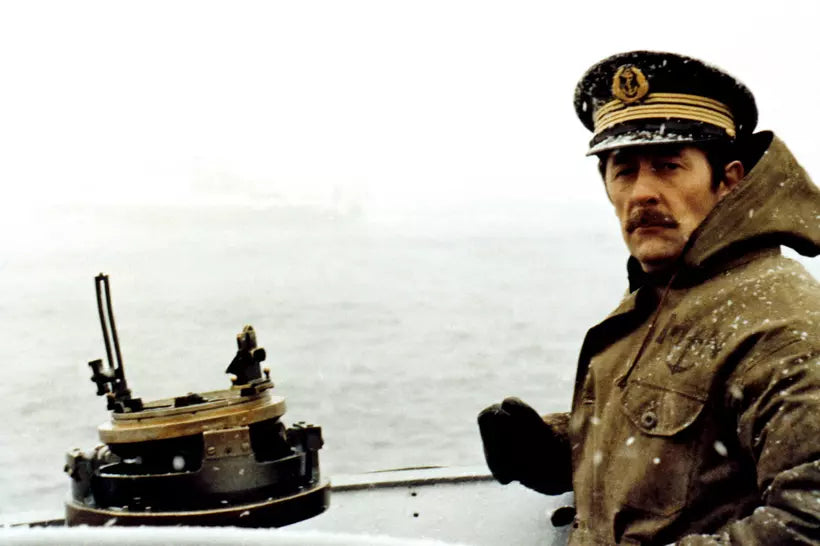
A remarkable illustration of this heritage is given by the film Le Crabe-Tambour (1977), directed by Pierre Schoendoerffer. It shows French Navy officers and sailors at sea, wearing authentic watch jackets and overalls, similar to those produced by Coulange at the time. The film, recognised for its military realism, depicts this equipment in its original context, reinforcing its place in the French collective imagination.
Beyond its military use, the watch jacket has influenced many aesthetic and technical movements in professional and civilian clothing, becoming a discreet symbol of robustness and efficiency. To go further on this heritage, see our analysis in the Parka Heritage Coulange article.