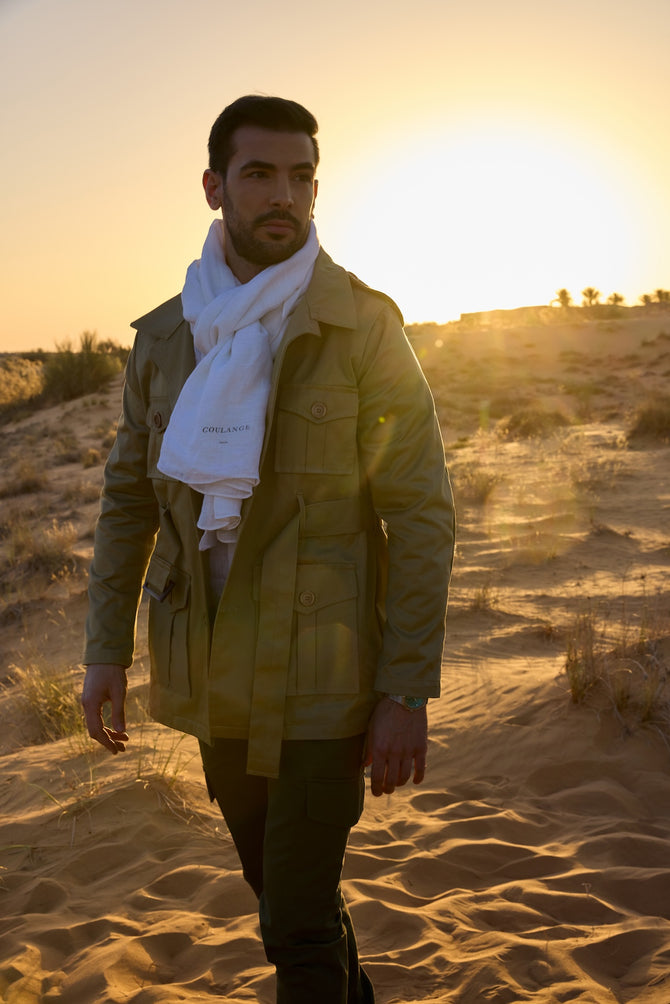
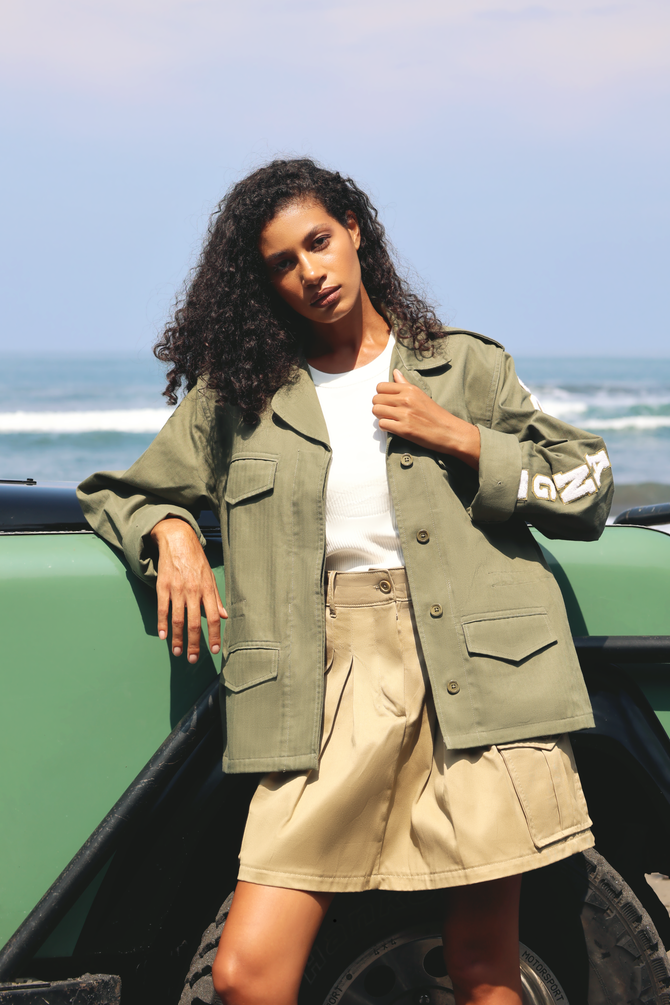


The men's linen shirt has, for decades, been one of the most iconic pieces of men's summer wardrobe - and yet, one of the most misunderstood. Too transparent, poorly cut, cut from mediocre linen or worn for the wrong purpose: it can quickly betray a silhouette rather than enhance it. Well chosen, on the other hand, it becomes that indestructible piece that we wear ten summers in a row, from a business lunch to a barefoot dinner by the sea. This guide covers everything a demanding man needs to know before purchasing: the quality of the linen, the cuts that are truly flattering, the colors that go through the seasons, good manners to wear it and the care that keeps it in shape. A well-selected linen shirt is never an expense: it is a clothing investment in the noble sense.
Why linen remains the queen material of summer
Flax has been cultivated in France since the Middle Ages, and France today produces, with Belgium and the Netherlands, almost 75% of the world's flax. This plant fiber has qualities not found elsewhere: it absorbs up to 20% of its weight in moisture without appearing wet, regulates body temperature naturally, and grows almost without water or pesticides. In terms of clothing, linen has this dry drape, this slight relief and this unique way of capturing the light which immediately distinguishes a noble piece from a viscose imitation.
Compared to cotton, linen is more breathable and dries much faster. Compared to silk, it is more robust and infinitely easier to maintain. And unlike synthetic fibers, it does not retain odors and develops a nice patina over time. It is precisely this honesty of the material that makes it a central piece of the wardrobe of a man attached to quality. To go further on the virtues of fiber and its different uses, our file on linen and cashmere summer fashion accessories details the pieces that get the most out of it.
Recognizing a quality linen shirt: the six criteria that count
The composition. Choose pure linen (100%) or, failing that, a predominantly linen blend (at least 70%) with a touch of cotton or viscose to soften the drape. Be wary of predominantly synthetic compositions, sold under the "linen look" label: they offer none of the thermoregulatory qualities of the fiber.
The weight. A linen shirt that is too light (less than 130 g/m²) will be transparent and will crease untidy. Aim for a weight between 150 and 200 g/m²: it is the ideal balance between summer lightness, fit and opacity.
Weaving. Well-woven linen has an even grain, without gross irregularities or spinning threads. Stretch the material to the light: the regularity of the weave is an excellent indicator of the quality of the thread used.
The finishes.
Turn the shirt inside out and examine the seams. Regular topstitching, folded seams on the sides and along the sleeves, clean collar and cuff lining, mother-of-pearl or corozo buttons sewn securely (and not glued): these details immediately distinguish a workshop piece from an industrial production.
The structure of the collar. A well-constructed collar, lightly canvased but flexible, holds its shape without breaking. A collar that is too stiff or too soft indicates economical manufacturing. On a linen shirt, we favor a classic shirt collar, a slightly open Italian collar or a Cuban collar — depending on the degree of relaxation desired.
The origin. A shirt woven and made in France or Europe, with clear traceability from thread to assembly, guarantees you not only superior longevity, but also respectful manufacturing. Today, it is the criterion that carries the most weight over time.
Cuts that flatter every body shape
A linen shirt is chosen as much for its cut as for its material. Here are the four main ones and their preferred body shapes.
The fitted cut (slim fit). Fitted at the waist, clear shoulders, narrow sleeves. It is particularly suitable for slender and slim silhouettes; it structures the silhouette without suffocating it. Avoid on rounder body types, where it can pull on the spots.
The straight cut (regular fit). It's the most universal cut: neither fitted nor loose, it just falls. It suits all silhouettes and remains the most versatile, whether tucked into pants or open over a t-shirt.
The oversized or relaxed fit. Looser, dropped shoulders, generous length. Very contemporary, it is part of the trend for more relaxed elegance. Ideal by the sea, to wear open over a white t-shirt or tied at the waist. To be adopted with caution if you are of small stature.
The Cuban collar or camp collar shirt. Straight cut, open collar, flat at the tips: this is the shirt for Mediterranean summers, inherited from Cuban guayaberas. Very flattering in light linen on tanned skin. Wear open over matching linen shorts or pants.
Whatever the cut, there is one rule: the shoulders must fall just right, the shoulder seam aligned with the point of your shoulder. A poorly positioned shirt loses all its outfit, even in the most beautiful material.
Timeless colors to favor
Linen lends itself admirably to natural shades, which capture the depth of the fabric and the subtlety of its grain. Five colors cross the seasons without ever tiring.
The white remains the linen shirt par excellence: sunny, timeless, it goes with absolutely everything, from raw jeans to matching linen pants. This is the summer piece that you have to have twice. The sand beige or string brings subtle warmth and enhances tanned skin. The sky blue or pale blue is the most versatile option for urban use: it goes with both suits and shorts. The light khaki or soft olive gives an adventurous note, perfect with raw pants or sand chinos. Finally, the navy blue
or midnight blue extends the linen shirt to dressier occasions and works wonders under an unlined jacket.
On the other hand, avoid flashy prints, overly strong graphic stripes and very saturated colors: linen is a noble material that is sufficient in itself. Its beauty lies in the subtlety of its texture, never in its graphic surface.
How to wear a men's linen shirt: three silhouettes to reproduce
For the day, refined urban version. White linen shirt, sleeves rolled up to the elbow, tucked into mid-rise beige chinos, natural leather belt, brown smooth leather moccasins or derbies. A simple watch and an optional Panama hat. It's the perfect silhouette for a summer lunch, a creative office day or a stroll around town.
For the seaside, adventurer chic version. Ecru linen shirt open over a white t-shirt, wide linen pants or linen Bermuda shorts, leather espadrilles or sandals, panama hat. We can draw inspiration from our guide to wearing linen jumpsuit in summer : the same logic of fluidity, natural materials and sand tones applies perfectly to the shirt. This silhouette crosses the decades without ever dating.
For the evening, dressed summer version.
Navy blue or off-white linen shirt, tucked into fresh wool or linen suit pants, thin leather belt, suede moccasins. An unlined jacket in cotton, linen or seersucker completes the ensemble. To explore the codes of safari-inspired summer elegance, read our guide to military style in summer : the same principles – noble material, clean cut, natural colors – apply to the linen shirt and take it out of the purely seaside register.
Linen shirt, poplin, cotton voile: how can you not confuse them?
Three neighboring but distinct rooms. The cotton poplin is smoother, tighter, more formal: it is the shirt of the suit, which is worn close to the body and holds its shape almost without ironing. The cotton veil is more airy, more transparent, ideal for urban summer but less structured. The linen shirt, it can be recognized by its visible grain, its dry fall and its inevitable propensity to crease nobly - a defect which is not a defect, and which many consider to be the very signature of the material.
In practice, these three pieces complement each other in a well-constructed summer wardrobe: a poplin for the formal office, a cotton veil for the hottest days in the city, a linen shirt for everything that happens between the sea and the warm stone of the Mediterranean terraces. For a coherent summer wardrobe, the linen shirt goes ideally with matching linen pants — the subject is covered in our
complete guide to linen pants, the logic of which applies equally well to the men's version.
Maintain your linen shirt to keep it for ten summers
A well-made linen shirt requires little maintenance but a few good gestures. Wash it at 30°C maximum, inside out, with a mild detergent without fabric softener - this weighs down the fiber and makes it lose its dry drape. Skip the dryer: Hang the damp shirt on a thick hanger and pull it at the seams to dry in shape. Linen dries very quickly in the open air.
For ironing, two schools. If you like wrinkled linen, stick to an iron on the collar, cuffs and front. If you prefer smooth linen, iron the shirt while still slightly damp, with a hot iron and a damp cloth so as not to shine. For localized stains, treat immediately with a little soapy water rather than restarting a full cycle. Stored on a suitable hanger out of season, your shirt will retain its structure for years — and will patina nicely, like all beautiful pieces made of natural fiber.
The Coulange shirt: the French elegance of the adventure wardrobe
At Coulange, the linen shirt has been one of the pillars of the wardrobe since the beginning. Made in our workshop in Mayenne, it is cut from high-quality linen woven in Europe, with a weight of 175 g/m² which ensures hold and opacity, folded seams, hand-stitched corozo buttons and reinforced cuffs. Our Coulange linen shirt
embodies this chic adventurer philosophy: a piece that you put on over shorts to go to the market, that you tuck into linen pants for a lunch by the sea, or that you wear under an unlined jacket for a summer dinner. It is made to live, age and accompany — season after season — men who love elegance that has a story. For a perfectly composed summer silhouette, it pairs naturally with our Coulange Saharan Jacket, direct heir to the shipping wardrobe.
Frequently Asked Questions About Men's Linen Shirt
Can you wear a linen shirt to the office?
Yes, as long as you choose a clean cut (regular or fitted), a sober color (white, sky blue, navy) and tuck it into pants. With an unlined jacket, it replaces a classic poplin very well on hot summer days. On the other hand, prefer a poplin for very formal meetings.
Should you take your usual size for a linen shirt?
Yes, as a general rule. Linen stretches very little, and the cut is designed for the material. Be wary of shirts cut too big, which will float at the shoulders the first time you wear them. Systematically check the shoulder drop and sleeve length.
Should a linen shirt really wrinkle?
Crinkling is part of linen's identity: it's even what distinguishes it from synthetic fibers that imitate its appearance. Good quality linen creases nobly, in large soft folds, and not in small disordered folds. It is a signature to be accepted, even claimed.
What is the difference between pure linen shirt and linen-cotton blend?
Pure linen offers maximum breathability and the most characteristic drape, but wrinkles more. A linen-cotton blend (70/30 for example) softens the drape, slightly reduces wrinkling and makes ironing easier, at the cost of slightly less breathability. For a single versatile shirt, the blend is a great compromise.
How to prevent a light linen shirt from becoming transparent?
Choose a sufficient weight (at least 150 g/m²) and a tight weave. Linen shirts that are too thin, sold at low prices, quickly become transparent when worn on tanned skin. In the light of the store, press the shirt against your hand: if you can clearly see the outlines of your fingers, the fabric is too light.
Discover our men's collection in our collection.