

Men's Wool Jacket: the Guide to Choosing and Wearing this Timeless Piece
The men's wool jacket is one of the noblest and most durable pieces of the men's wardrobe. Whether in pure wool, silky cashmere or textured tweed, it offers incomparable warmth, comfort that improves with time, and an undisputed aesthetic presence. This comprehensive guide article explores the different wools, the cuts adapted to each body type, the contemporary styles and the selection criteria for investing wisely. Coulange 1918, an excellent French manufacturer, helps you navigate this rich universe where substance always takes precedence over appearance.
Wool: Living Matter, Ancient History
Wool is the oldest textile fiber exploited by humanity. Sheared for millennia, sheep fleeces offer a remarkably complete fiber: capable of regulating body temperature, naturally hydrophobic, biodegradable, renewable. Unlike polyester or nylon (petroleum, synthetic, impossible to decompose), wool returns to the earth without long-term ecological degradation.
However, not all wool is created equal. Fibrous fineness varies enormously depending on the breed of sheep, the breeding region and the shearing season. Merino wool is remarkably fine and supple. Wool from British sheep tends towards a more rustic texture. Cashmere and angora offer extreme finesse but at exponential cost and complexity.
Understanding wool means understanding that you’re not just buying a piece of clothing; you are purchasing a relationship with living matter that will evolve with you. A well-constructed wool jacket will patina, gradually readjust to your body, and improve emotionally with use. This is rare in modern clothing.
Wool Typologies: Choosing your Fiber
Virgin wool is the queen category. It comes from the first shearing of a sheep, offering superior length and fibrous regularity. It has never been chemically treated; it retains all its thermal capacity and its natural flexibility. A pure new wool jacket is a decades-long investment.
Cashmere is the finest and most desirable fiber, sourced from the cashmere goat of Tibet and Mongolia. Cashmere offers an incomparable feel—soft, almost silky, with warmth disproportionate to its weight. However, cashmere requires careful maintenance and remains significantly more expensive than virgin wool. Pure cashmere requires around 50% more investment than comparable virgin wool.
Tweed is a traditional wool, usually made from blends of natural dyes, creating textured and highly characteristic fabrics. Raw tweed, with its pile and texture, offers a timeless aesthetic. Flannel is a worsted wool creating a softer, more united surface. Each type requires a different stylistic intention.
Wool-silk or wool-cotton blends offer a smart balance: the noble presence of wool combined with additional lightness and breathability. For spring and fall, these blends are often superior to pure wools.

Coulange 1918
Cashmere Cloth Jacket T41
Pure cashmere, incomparable finesse, silky touch. Investment clothing made in France. Timeless, invigorating, definitive.
Discover →Selection Criteria: How to Recognize a Good Wool Jacket
First of all, touch. Actually touch the jacket. Quality wool offers immediate softness to the touch. If the fiber initially itches or stings, this is a sign that the fiber fineness is lower. An exception exists: raw tweed, deliberately rustic, may initially appear more textured, but even fine tweed has a fundamental silliness to the touch.
Examine the density of the fabric. A good woolen cloth should weigh between 450-700 grams per square meter for a cold season jacket. You must be able to feel this density in your hand: it is a fabric that exudes structure, which offers a palpable substance. Fabrics that are too light are quality warning signs.
Inspect the finishing details. The seams must be clean and even, without topstitching hieroglyphics. The lining—often invisible but crucial—must also be of quality. A good lining fabric (silk, high density cotton) considerably improves the feeling of wearing the garment. Pockets must be reinforced at the seam. Buttonholes should be rounded and hand finished if possible.
Check the provenance. Scottish wools, Australian merino wools and Tibetan cashmeres offer different characteristics. A jacket made in France from traceable wool offers a reassuring transparency that offshore production cannot match. Coulange 1918, in this sense, offers this complete traceability.
Cuts and Silhouettes: Finding your Harmony
The wool jacket comes in various cuts, and the choice inherently depends on your body shape and your stylistic intention. A classic cut remains timelessly accurate: slightly fitted at the waist, reaching down to mid-buttock, structured but natural shoulder. This cut works for almost every body shape.
A looser fit offers greater comfort and a more relaxed aesthetic, ideal if you prioritize the physical sensation of wearing over the visual impression. A very fitted cut creates a sharp silhouette, suitable for slender figures. Always try before you buy; wool should create a feeling of immediate well-being, never constraint.
The proportions of the collar, sleeves and length are also critical. The collar should sit comfortably without too much grip on the neck. The sleeves should come down to the wrist, revealing approximately 1-2 cm of inner shirt. A length that hits mid-buttock is generally optimal, neither too short nor too long.
How to Wear a Wool Jacket: From Casual to Evening
A well-chosen wool jacket is a sartorial chameleon. Over a white t-shirt and raw jeans, it creates effortless elegance. Over an ecru Oxford shirt and gray chinos, it becomes surprisingly formal. With a turtleneck sweater in winter, it adds a layer of texture and captivating visual depth.
In light summer, a merino wool jacket or wool-cotton blend over a graphic tee and chino shorts offers a relaxed but restrained vibe. For a formal evening, a wool jacket (especially one in cashmere or a fine wool) over tuxedo pants creates a statement of personal elegance. The wool jacket is never out of place; it simply reorganizes the contexts around it.
Accessorizing doesn’t matter. A light scarf in winter, matching shoes, a discreet belt—that's everything a wool jacket requires. She rarely competes; rather, it structures the context in which everything else naturally fits.
Maintenance and Longevity: Preserving the Investment
A wool jacket requires regular but simple maintenance. After each wearing, hang it on a sturdy hanger in a well-ventilated closet. This allows the fibers to rest and regain their shape. A soft wool brush, passed once a month in the direction of the fibers, removes dust and revives the natural shine of the fabric.
For cleaning, choose dry cleaning or, if you prefer to wash at home, a very delicate cycle in cold water with a specialized wool-silk detergent. Wring gently (never twist) and dry flat or hanging, away from any direct heat source. Occasional ironing—very light—at critical points maintains a sharp look.
Long storage requires extra care. Before storing for the season, clean the jacket. Store in a breathable cover in a clean, dry cupboard. Check regularly during storage. Use mothballs or moth-treated covers—what really matters is initial cleanliness and good ventilation.
With this basic regimen, a quality wool jacket easily lasts two or three decades, getting better emotionally with time. It’s an investment that pays off emotionally and even financially (a well-kept vintage wool jacket sells for 40-60% of its new value).

Coulange 1918
B16 Officer Jacket
Noble wool, perfect cuts, refined military heritage. Defines timeless masculine elegance made in France.
Discover →Wool, Adventurer and Sustainability
Wearing a wool jacket means displaying a conviction: that quality takes precedence over quantity. It means refusing the paradigm of “fast fashion” which offers a thousand disposable items of clothing rather than a dozen timeless pieces. It also means displaying ecological awareness—wool, a renewable and biodegradable fiber, offers a superior alternative to petroleum-based synthetics.
A chic adventurer knows that true style is in substance. A wool jacket that lasts two decades, that ages superbly, that offers a feeling of physical well-being every time you wear it—that's true high-end.
Wool Jacket and Complementaries: Wardrobe Ecosystem
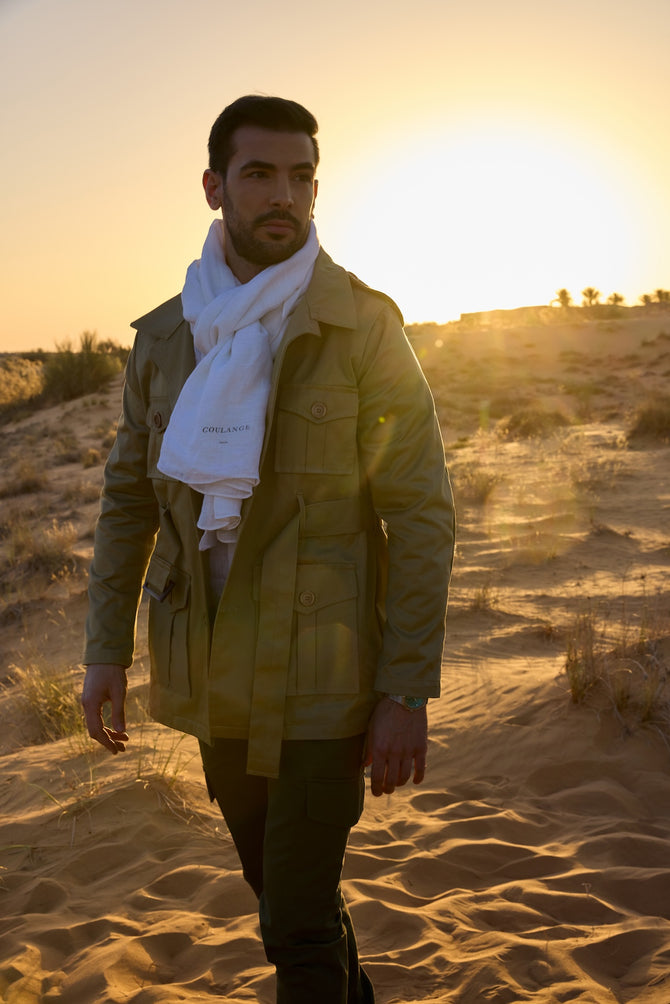
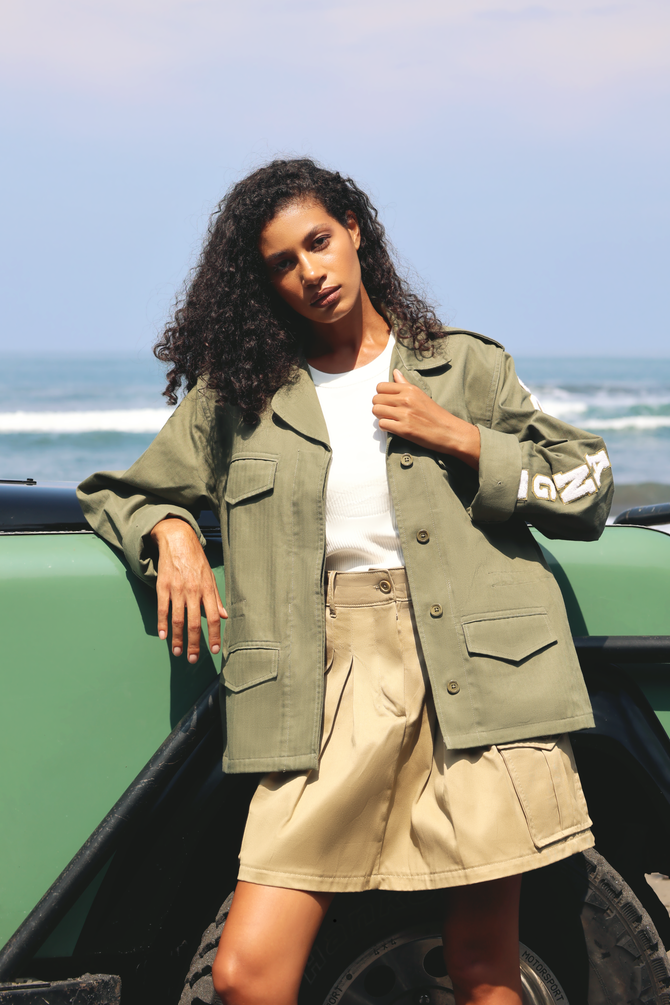
The wool jacket fits naturally into a cohesive wardrobe. Complete it with a lookgorpcore for adventurous days, a military parka for the extreme, a safari jacket for heat. The wool jacket remains the foundation: it is the jacket to which we return, the one which structures everything else.
Coulange 1918 offers a collection sustainable clothing designed precisely for this coherent ecosystem. Each piece speaks the same language of quality, trace, and timeless design.
FAQs
What is the difference between virgin wool and cashmere?
Virgin wool comes from the first shearing of a sheep, offering superior fineness and remarkable fibrous regularity. Cashmere, a fiber from the cashmere goat, is rarer, finer and more delicate. Cashmere offers an incomparable feel but requires more careful maintenance and costs significantly more.
How do you know if wool will be scratchy or soft?
Touch the jacket before purchasing. Really touched. A noble wool fabric must offer immediate softness. If the initial sensation is rough or prickly, this is a sign of lower fiber quality. Quality wool should be soft upon first contact, then soften further with wear and wear.
Can you mix a wool jacket with other materials for summer?
Yes. A wool-silk or wool-cotton blend offers superior breathability while retaining the noble presence of wool fabric. These blends are particularly suitable for spring and autumn, providing flexible thermoregulation.
How to store a wool jacket without the risk of moths?
Store in a clean, dry cupboard. Wash the jacket before long-term storage (summer storage, for example). Use mothballs or a protective cover treated against moths. Check regularly during storage. Good ventilation is more important than insecticides.
Is wool sustainable and ethical?
Yes, if it comes from responsible sources. Wool is a biodegradable fiber, renewable and relatively less impactful than synthetics. However, check the provenance. Coulange 1918 works exclusively with traceable wool, coming from certified factories that respect animal welfare.